AP Macroeconomics
How Banks Create Money (No, Really)
In a fractional reserve banking system, banks hold only a fraction of deposits in reserve and lend the rest. The money multiplier (1 ÷ RRR) shows how a single deposit can expand the money supply. The Fed can use the reserve requirement as a monetary policy tool.
Printable Cheat Sheets for Every Unit
Everything you need to ace your exam, all on a single page.
Download PDF Cheat SheetsI have told you before, that you're already a part of the economy. But get this: every time you deposit $1,000 into your bank account, you could be helping create $10,000 or more throughout the economy. How is this possible? Let's learn about the fractional reserve banking, which acts as the lifeline of our economy and is an important topic on the AP exam.
What Happens After You Deposit?
When you hand your money to a bank, the bank doesn't just lock it in a vault and wait for you to come back. It puts that money to work.
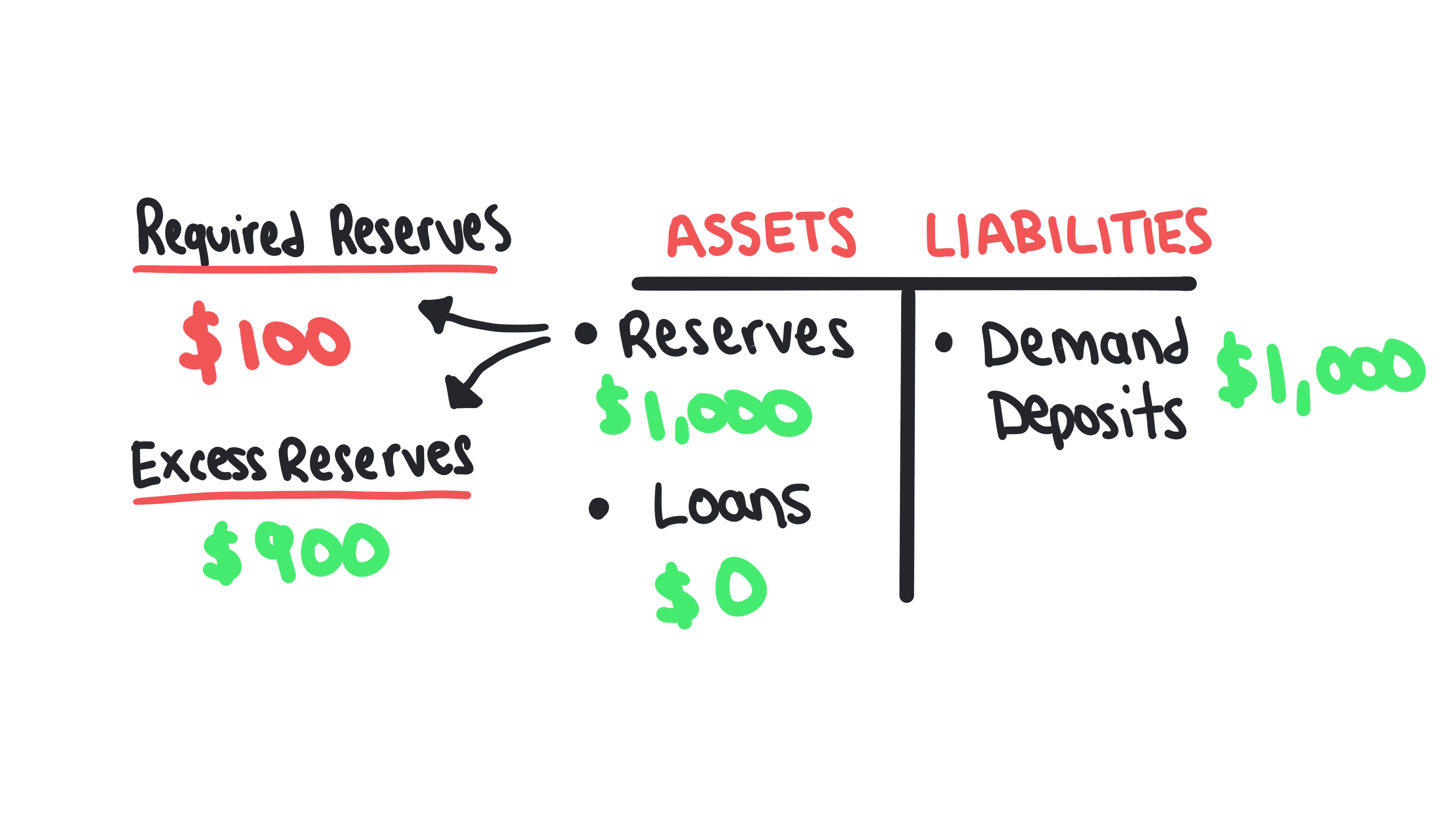
Banks are (or at least were… more on that here) required by the Federal Reserve to hold a fraction of every deposit in reserve. This is the required reserve ratio (RRR). If the required reserve ratio is 10%, and you deposit $1,000, the bank must keep $100 on hand. That $100 is the required reserve.
The remaining $900 is called the excess reserve and the bank is free to lend it out.
The Chain Reaction
Now here's where it gets interesting. A business borrows that $900 to buy a new piece of machinery. The equipment supplier receives that $900 as payment and deposits it at their bank — let's call it Bank B.
Bank B now holds $900 in deposits. It keeps 10% ($90) as required reserves and lends out the remaining $810.
That $810 gets spent, deposited at Bank C, and the cycle repeats. Bank C keeps $81 and lends out $729. Then it happens again. And again. Each round, the amount gets smaller, but the lending never stops until there's nothing left to lend.

Enter: The Money Multiplier
Writing out every round of this chain would take forever. It's much easier for economists to use the money multiplier formula to calculate the total potential increase in the money supply from a single deposit:
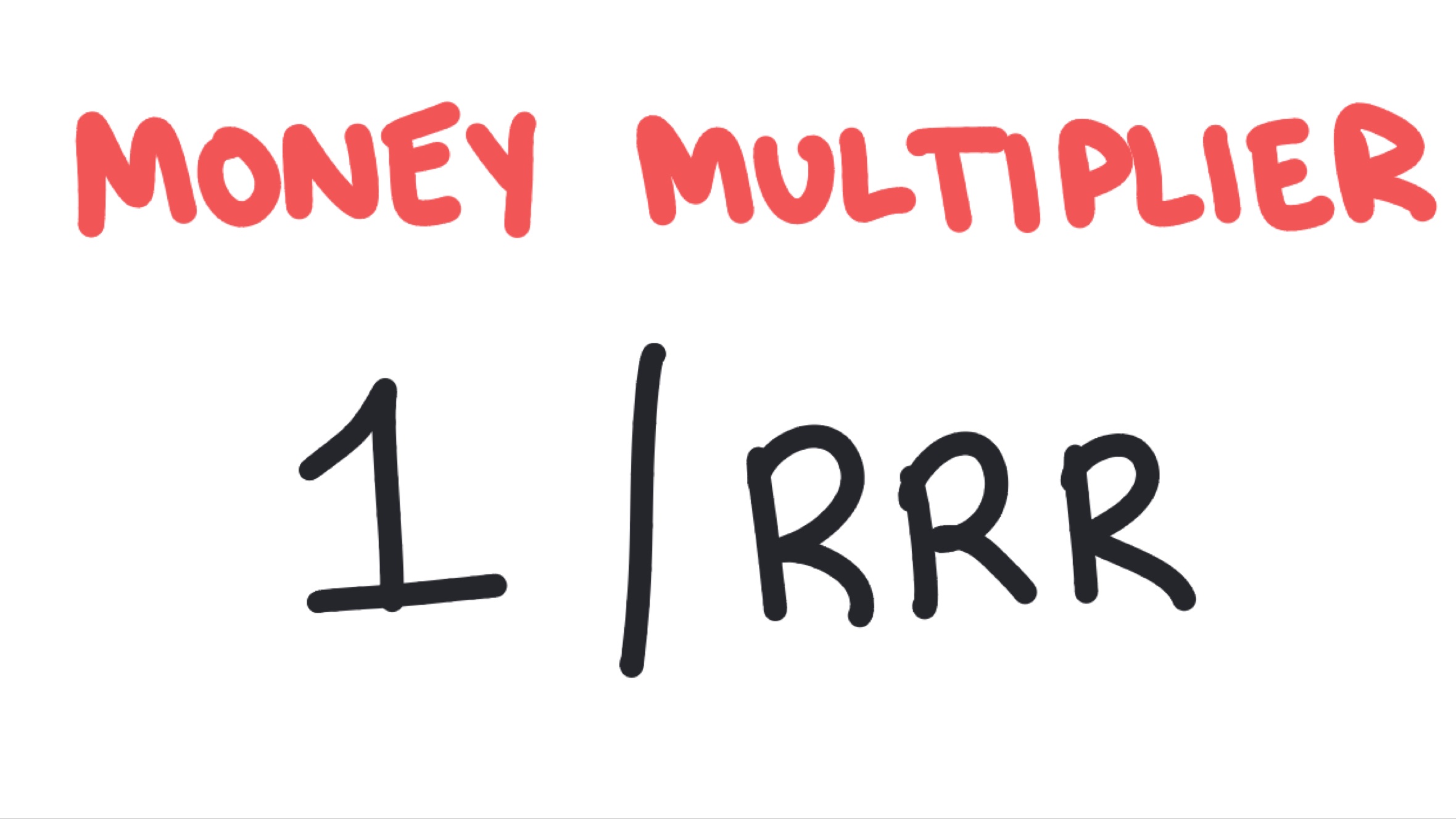
Money Multiplier = 1 ÷ Reserve Requirement Ratio
With a 10% reserve requirement:
1 ÷ 0.10 = 10
To use the money multiplier to calculate the maximum potential change to the money supply as a result of your deposit, use this formula:

Max Potential Change to MS = Change in Excess Reserves × Money Multiplier
A few things to keep in mind for the AP exam:
- The money multiplier gives you the maximum possible increase — in reality, the effect is smaller because people hold some cash, banks sometimes hold excess reserves voluntarily, and not every loan gets immediately redeposited.
- If the reserve requirement is lower, the multiplier is higher. Banks lend out more of each deposit. If it's higher, the multiplier shrinks.
- The Fed can use the reserve requirement as a monetary policy tool: raising it contracts the money supply, lowering it expands it. For a deep dive into how this works in today's system, check out the ample reserves market article.
Maybe most importantly, the Federal Reserve doesn't actually use the required reserve ratio anymore. It has become obsolete, at least for the time being.
Check Your Understanding
Question 1 of 3
Suppose the required reserve ratio is 10%. If Sarah deposits $1,000 cash into her checking account at First Bank, what is the maximum possible increase in the total money supply from this single deposit?