AP Macroeconomics
Crowding Out: Why it's Harder than It Looks to Stimulate the Economy
Crowding out occurs when government borrowing raises real interest rates in the loanable funds market, reducing private investment. This offsets some of the stimulus from expansionary fiscal policy, making it less effective at closing a recessionary gap.
Printable Cheat Sheets for Every Unit
Everything you need to ace your exam, all on a single page.
Download PDF Cheat SheetsEarlier in Unit 3, we saw how the government uses expansionary fiscal policy to pull the economy out of a recession. They spend money (G ↑) or cut taxes (T ↓) to shift Aggregate Demand to the right.
But there is a catch. If the government doesn't have a surplus sitting in a vault, they have to borrow that money. This leads to a phenomenon called Crowding Out.
1. The Loanable Funds Connection
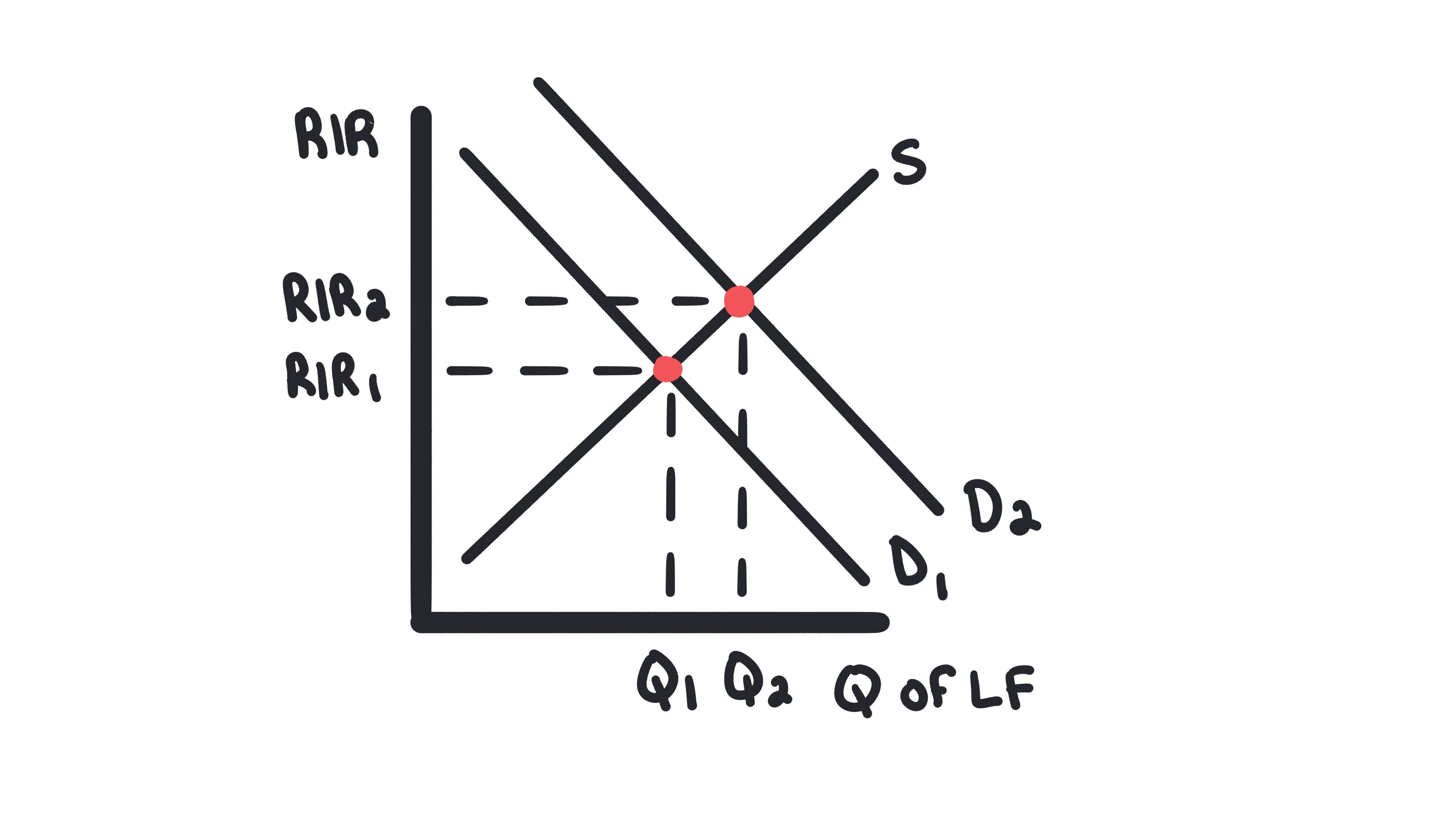
When the government runs a budget deficit, they enter the Loanable Funds Market as a borrower. This increases the total demand for loans in the economy.
As the Demand for Loanable Funds shifts to the right, the Real Interest Rate (r) increases. Think of it like any other market: when a massive new buyer (the government) enters the market for "money," the price of that money goes up.
2. Private Investment vs. Government Debt
This is where the government's plan backfires. Remember that the entire reason the government is borrowing money in the first place is to help stimulate the economy—to get people and businesses spending again. Those households and private businesses also need loans to buy houses, cars, and new factory machinery.
- The Problem: When interest rates rise because of government borrowing, it becomes too expensive for private businesses to borrow.
- The Result: Private Investment (I) decreases.
3. The AD/AS Impact: The “Nudge Back”
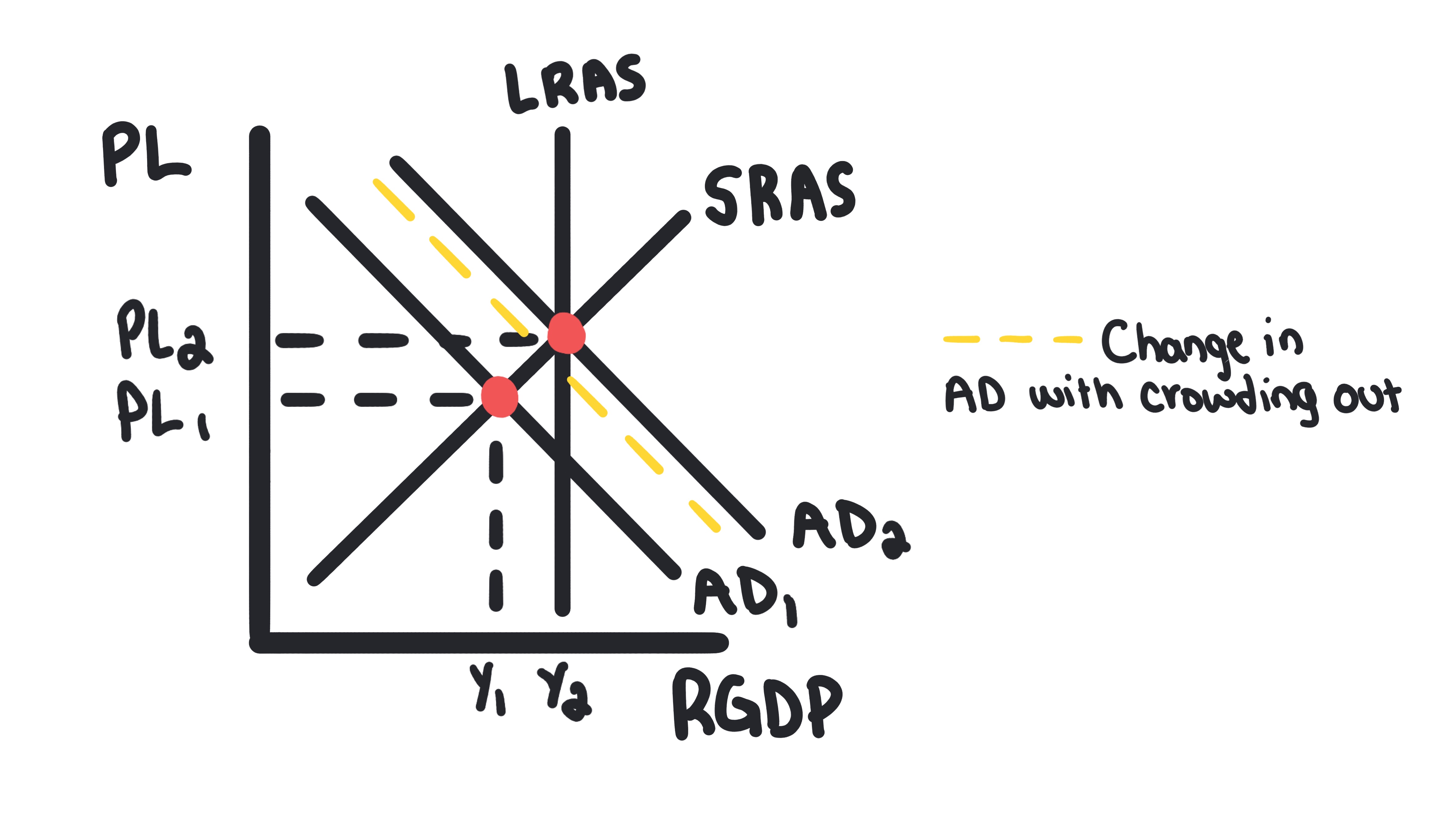
Recall the components of Aggregate Demand: AD = C + I + G + (X−M).
- The government increases G to shift AD to the right.
- But the resulting high interest rates cause I to drop.
- This drop in I nudges the AD curve back to the left.
The Bottom Line: Crowding out makes fiscal policy less effective. The government is “crowding out” the private investors who are the real engine of long-term economic growth.
4. Why it Matters for the Exam
On the FRQ, you will often be asked: “Identify the effect of the government's action on the real interest rate and private investment.”
- Real Interest Rate: Increases.
- Private Investment: Decreases.
- Long-Run Growth: Decreases (because less I today means less capital equipment tomorrow).
Test Your Understanding
Can you draw the loanable funds market shift and explain the crowding-out effect in under two minutes? That's exactly what the FRQ will ask.
Practice the Unit 5 FRQ WalkthroughOur AI-guided tool will check your graph instantly.
Check Your Understanding
Question 1 of 2
To combat high inflation, a country enacts contractionary fiscal policy and contractionary monetary policy. What is the most likely short-run impact on real output and the price level?