AP Macroeconomics
Short Run and Long Run Equilibrium
Short-run equilibrium describes where the economy performs today relative to its potential (SRAS and AD). Long-run equilibrium is your sustainable capacity (LRAS). Economic growth shifts LRAS right; fluctuations are short-run performance relative to that capacity.
Printable Cheat Sheets for Every Unit
Everything you need to ace your exam, all on a single page.
Download PDF Cheat SheetsIn Unit 3 of AP Macroeconomics, you’re often asked questions about the short-run effect of this or that policy action, or what will happen to something like price level in the long-run. But what is the difference between the short-run and long-run in macroeconomics anyways? To explain, let’s imagine you are training for a marathon.
1. The Daily Run: Short-Run Equilibrium (SRAS & AD)
Every day you lace up, you have a specific performance. This is the Short-Run. Your short-run equilibrium is just whatever distance you run on that given day. It could be a short run when you’re tired, or a long run when you’re feeling energized.
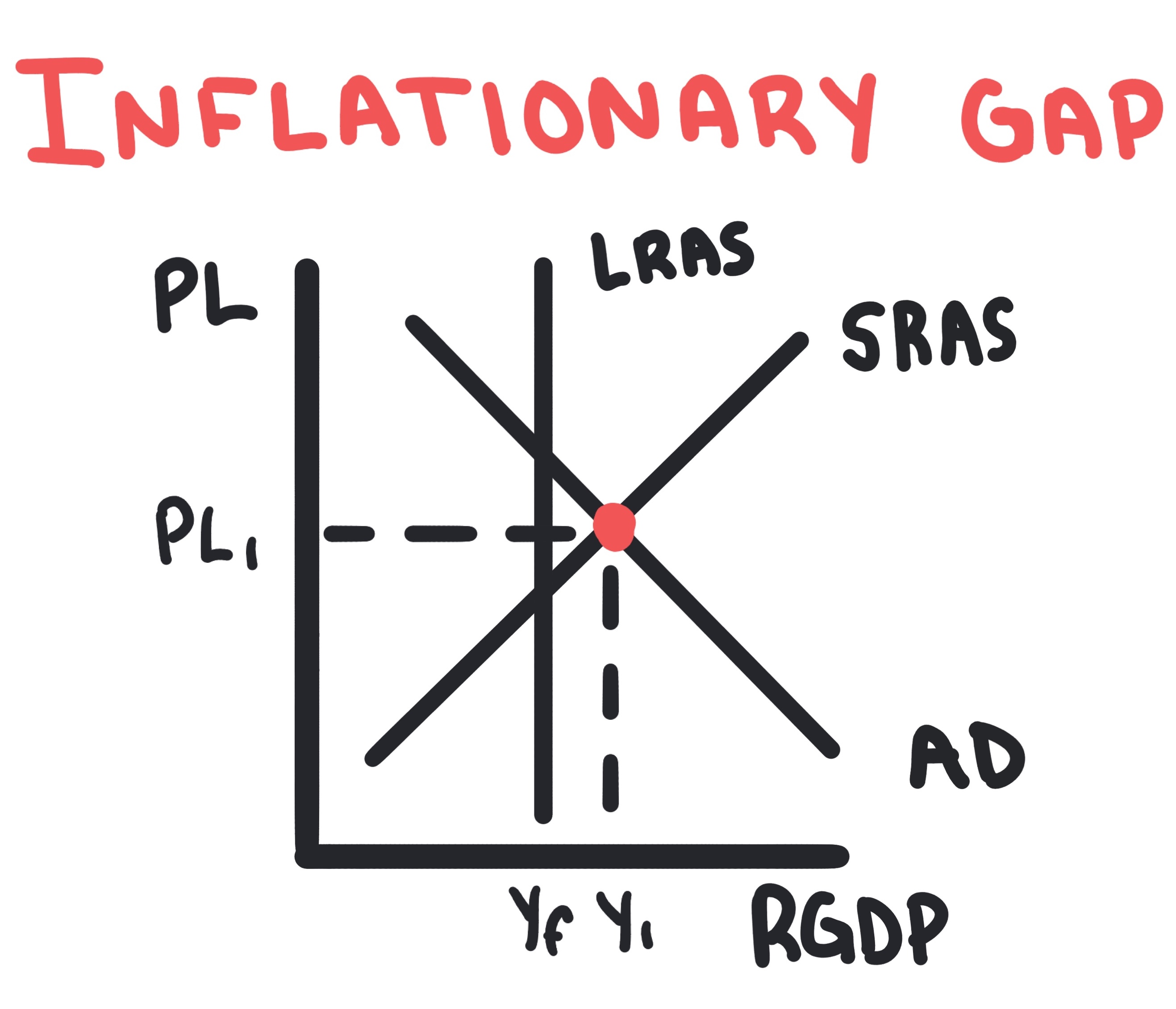
The "Pumped" Run (Inflationary Gap)
One day you feel incredible. You have a tailwind, a perfect playlist, and you've had plenty of sleep. You run way faster than your average pace. You are "over-performing."
Macro Link: This is Aggregate Demand (AD) shifting right. You've pushed output (RGDP) beyond your sustainable capacity (Yf).
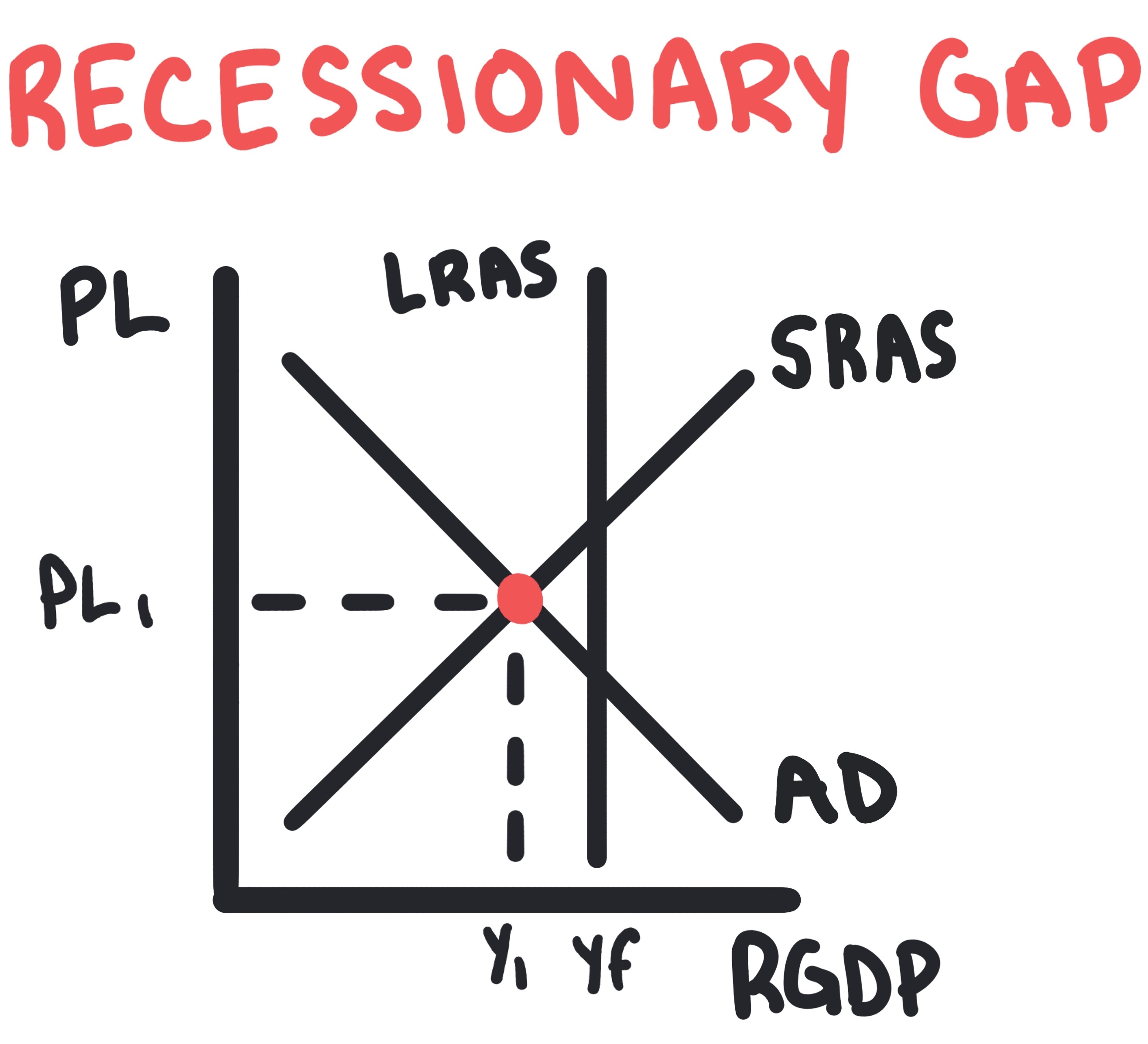
The "Sick" Run (Recessionary Gap)
Another day, you're exhausted or getting over a cold. You're sluggish, and your pace is terrible. You're normally able to run much further, but today you’re just not all there.
Macro Link: This is a decrease in AD or a supply shock. You are under-performing your potential.
Keep in mind that both the inflationary gap and the recessionary gap are examples of short-run equilibrium. Since short-run equilibrium just represents where the economy is producing at the moment, an economy is always in short-run equilibrium.
2. The "Mean": Your Current Fitness (LRAS)
Your current fitness level is the baseline. It’s the distance you expect to run when things are going smoothly. In the AD-AS model, this is the Long-Run Aggregate Supply (LRAS): the level of real output the economy can produce at full employment.
In the short run, you can have a great day or a bad day relative to that baseline. But eventually, you’re going to come back to your baseline. The same is true for the economy. While we might find ourselves in a recessionary gap, or dealing with a bout of inflation, the economy will wind up back at its natural rate of output eventually.
3. The Training Program: Long-Run Growth
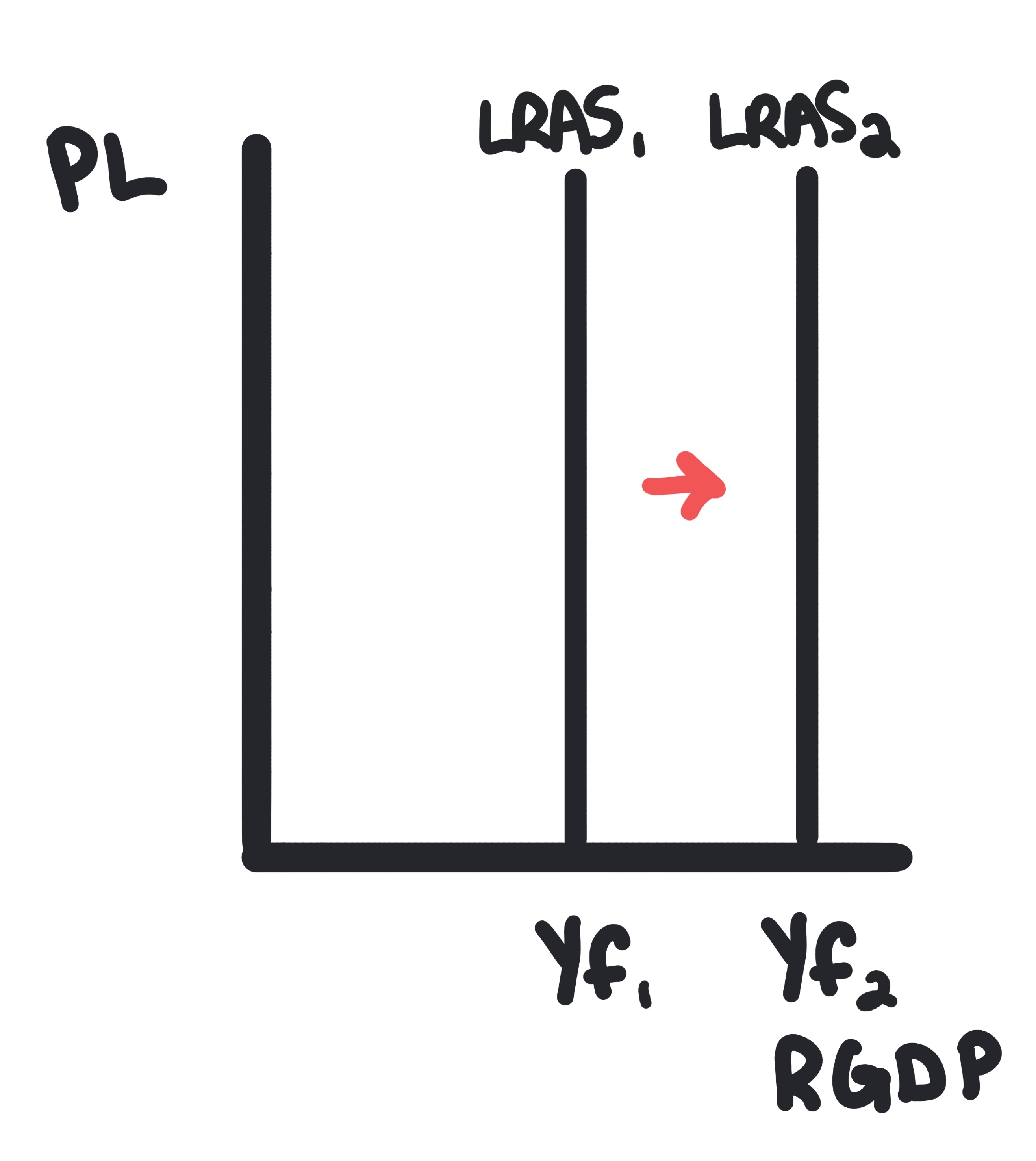
If you’re consistent in your training, and you take care of your body, you’ll notice that you can run longer distances. You aren't just having "good days", you’re changing your baseline.
On the AD-AS model, this is Economic Growth. You aren't just shifting the AD curve or SRAS; you are shifting the LRAS curve to the right.
The Shifters
Over your training period, there are a number of things that could improve your capacity to run long distances. Maybe you buy a better pair of shoes, or learn a new technique for pacing yourself. Of course, as you get into the habit of running, your endurance improves considerably. An economy might grow for the following reasons:
- More resources, like land, labor, or capital
- Improved quality of resources, like better human capital
- Technology
The Dojo Distinction
- Short Run: Is about performance. Are you having a good day or a bad day relative to your current fitness?
- Long Run: Is about capacity. How has your training shifted the entire "mean" of what you are capable of doing?
Check Your Understanding
Question 1 of 4
Assume an economy is initially in long-run equilibrium. The government then significantly increases its spending on infrastructure projects without changing taxes. In the short run, what is the most likely impact on the price level and real GDP?