Unit 4 - Financial Sector
Printable Cheat Sheets for Every Unit
Everything you need to ace your exam, all on a single page.
Download PDF Cheat SheetsTable of Contents
Built into this unit
Flashcards
69 cards mix graphs, formulas, and key terms. Shuffle blends every type so you drill the whole unit—not just one format.
4.1 - Financial Assets
Financial Assets
Learn about different types of financial assets and how they are used to store and transfer wealth.
Key Terms & Definitions
Financial Asset
Something that holds financial value, such as stocks, bonds, gold, or real estate.
Bond
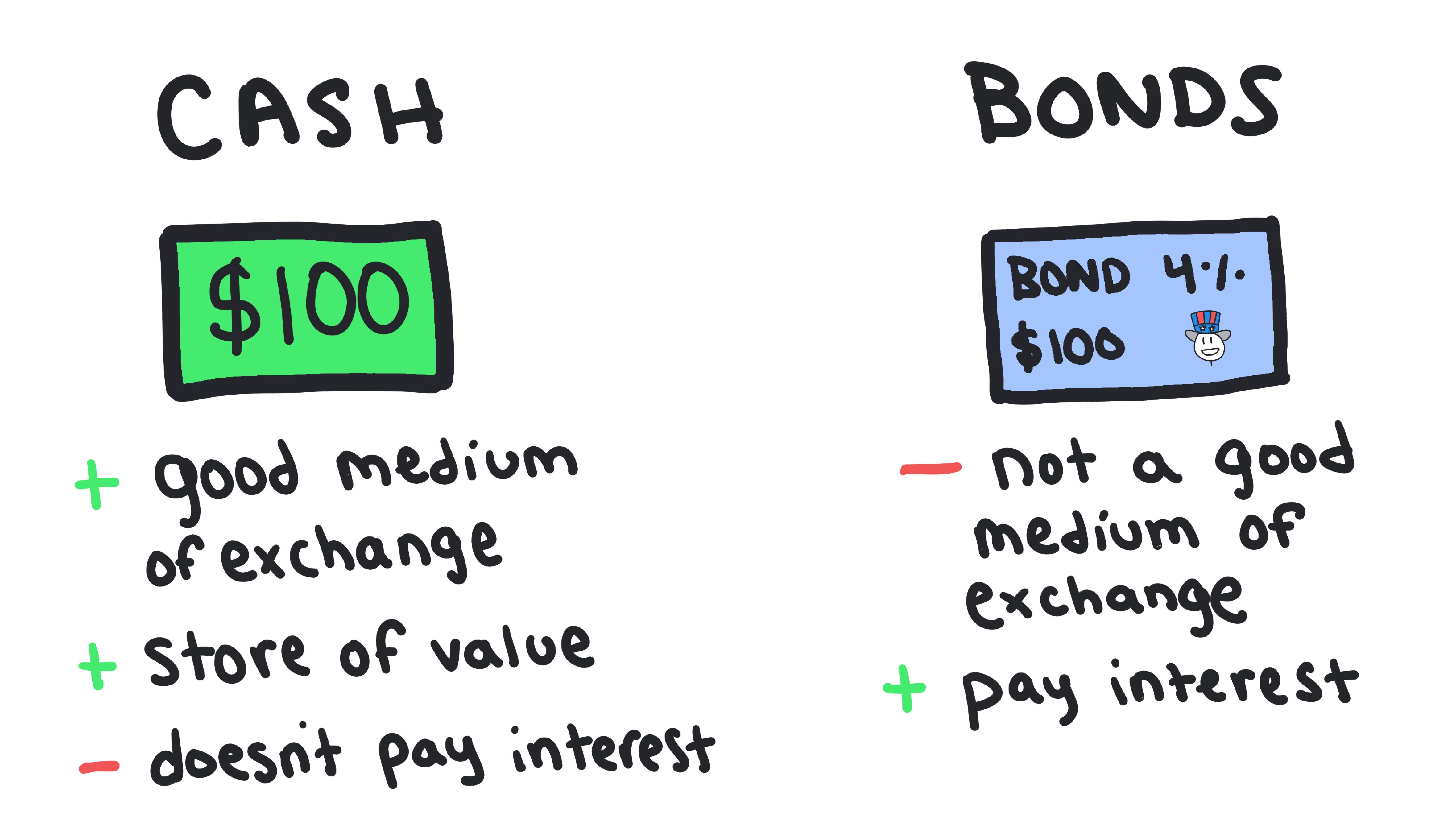
An investment that pays interest over time. Buying a government or corporate bond is essentially lending money to that entity.
Stock
A financial asset that represents a share of ownership in a company.
Certificate of Deposit (CD)
An interest-bearing savings account that holds a fixed amount of money for a fixed period, such as six months or a year. Part of the M2 money supply.
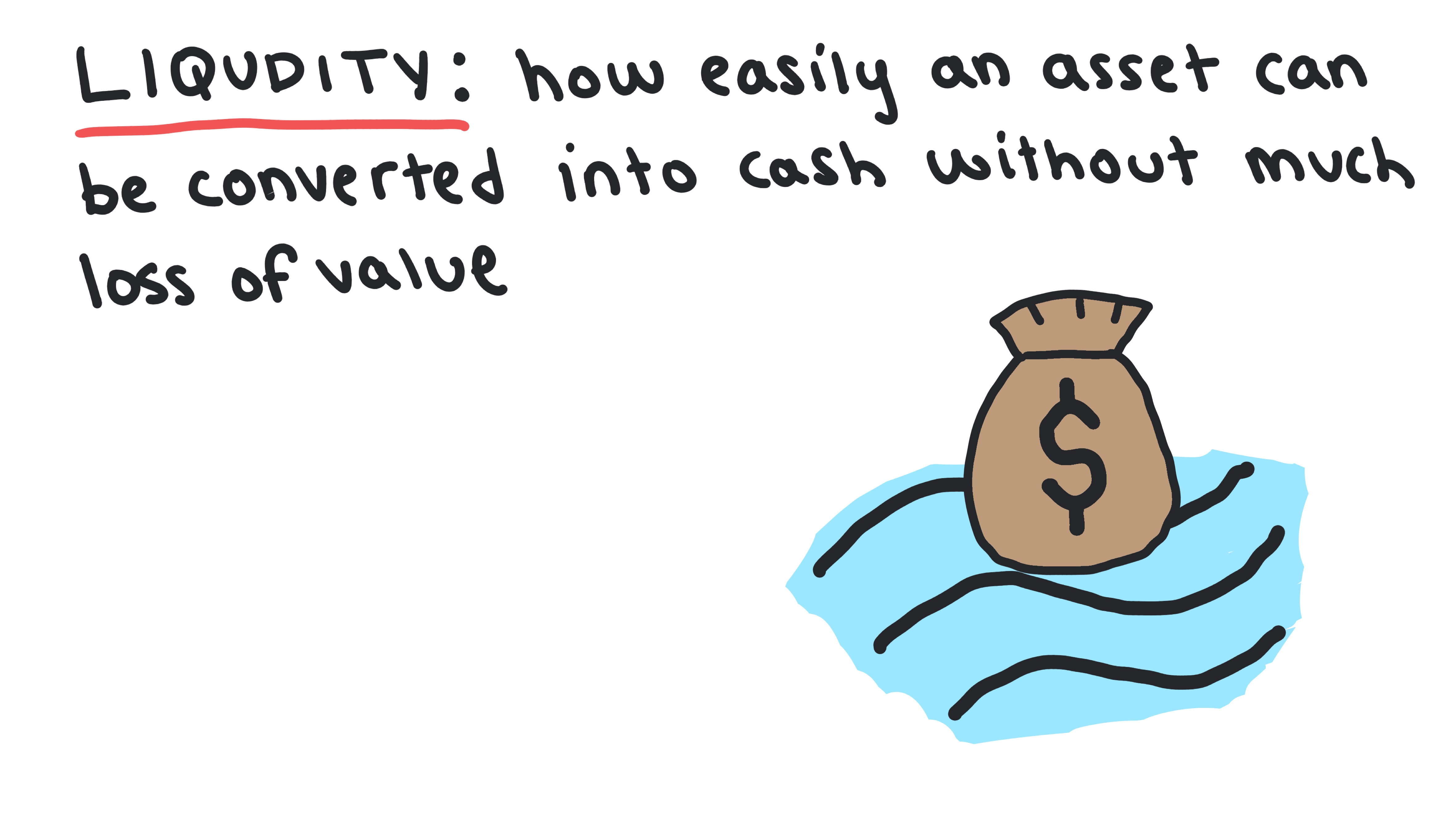
Liquidity
How easily an asset can be converted into cash without much loss of value.
- •Cash is the most liquid asset; a house is the least liquid.
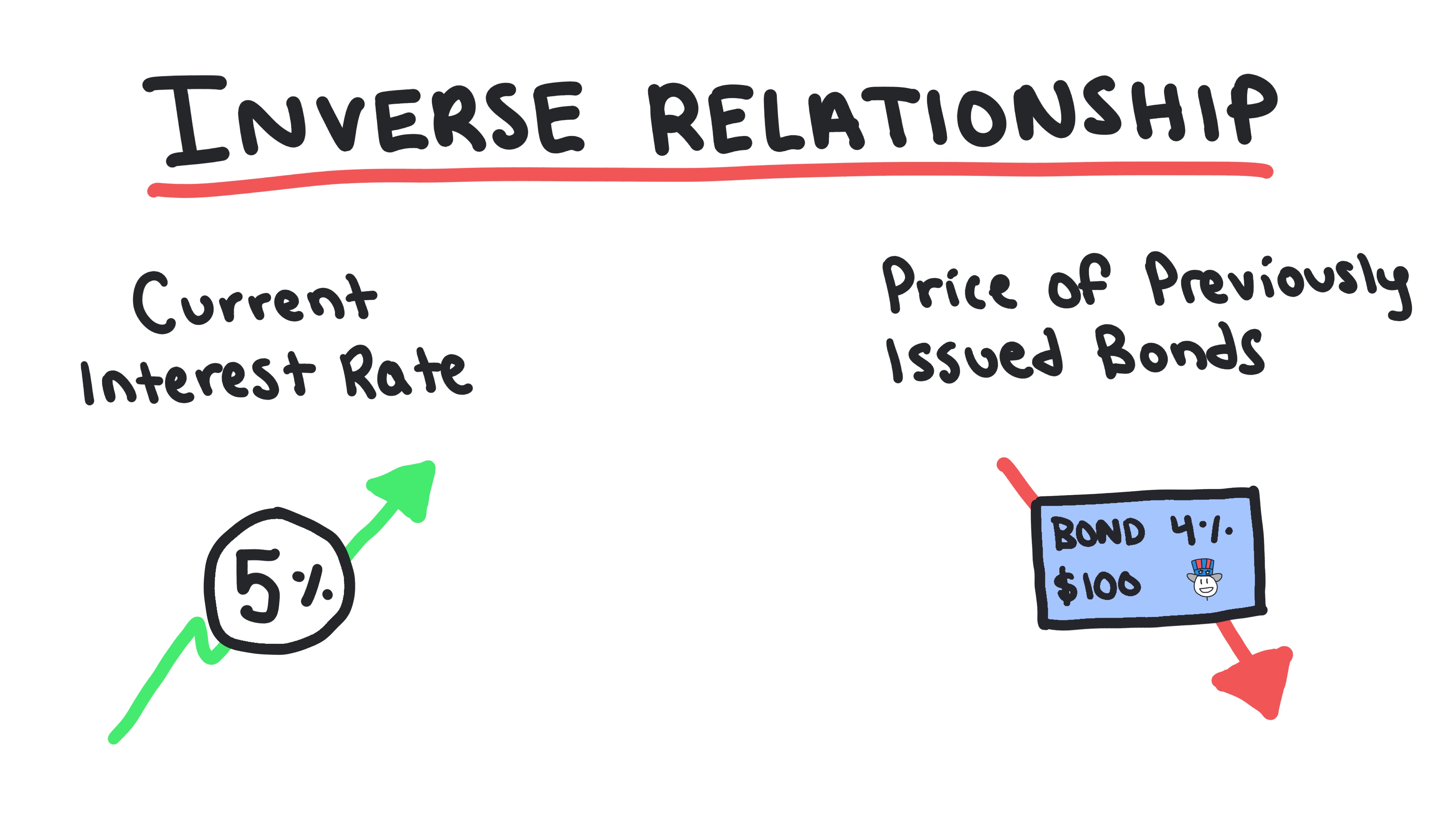
Inverse Relationship between Interest Rates and Bond Prices
When current interest rates go up, the price of previously issued bonds with lower interest rates goes down.
- •Example: If new 100 bond paying 3% must be sold for less than $100 to compete.
Whiteboards
Practice MCQs
Test your understanding of 4.1
Which statement best describes a key difference between bonds and stocks?
4.2 - Nominal v. Real Interest Rates
Nominal vs. Real Interest Rates
Learn about the difference between nominal and real interest rates, how to calculate them, and the effects of inflation on interest rates.
Key Terms & Definitions
Interest
The cost of borrowing money.
Nominal Interest Rate
The interest rate stated on a loan, as a percentage of the amount borrowed.
Real Interest Rate
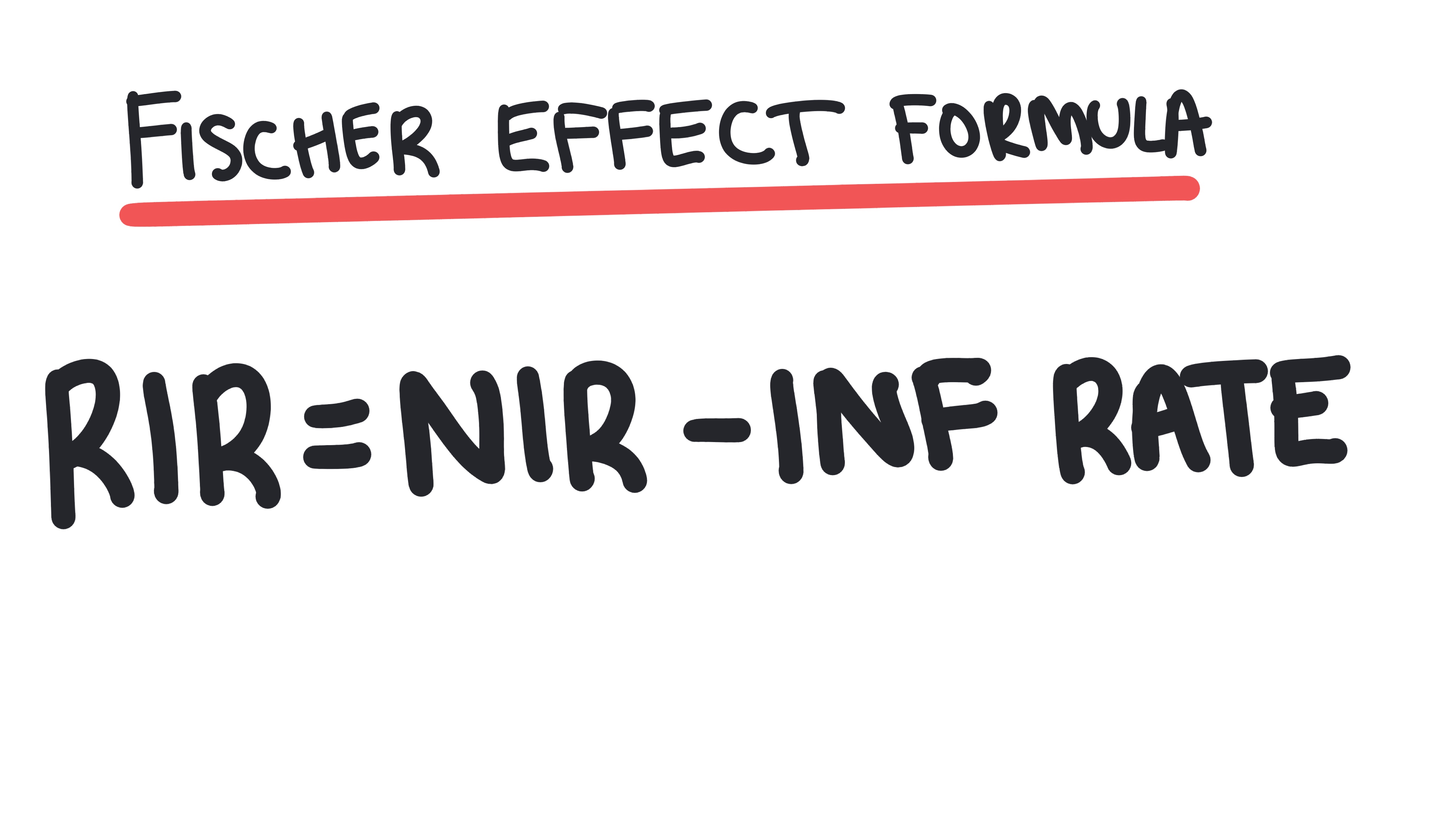
The nominal interest rate adjusted for inflation, showing the true gain in purchasing power for a lender.
- •Formula: Real Interest Rate = Nominal Interest Rate - Inflation Rate
Expected vs. Actual Inflation
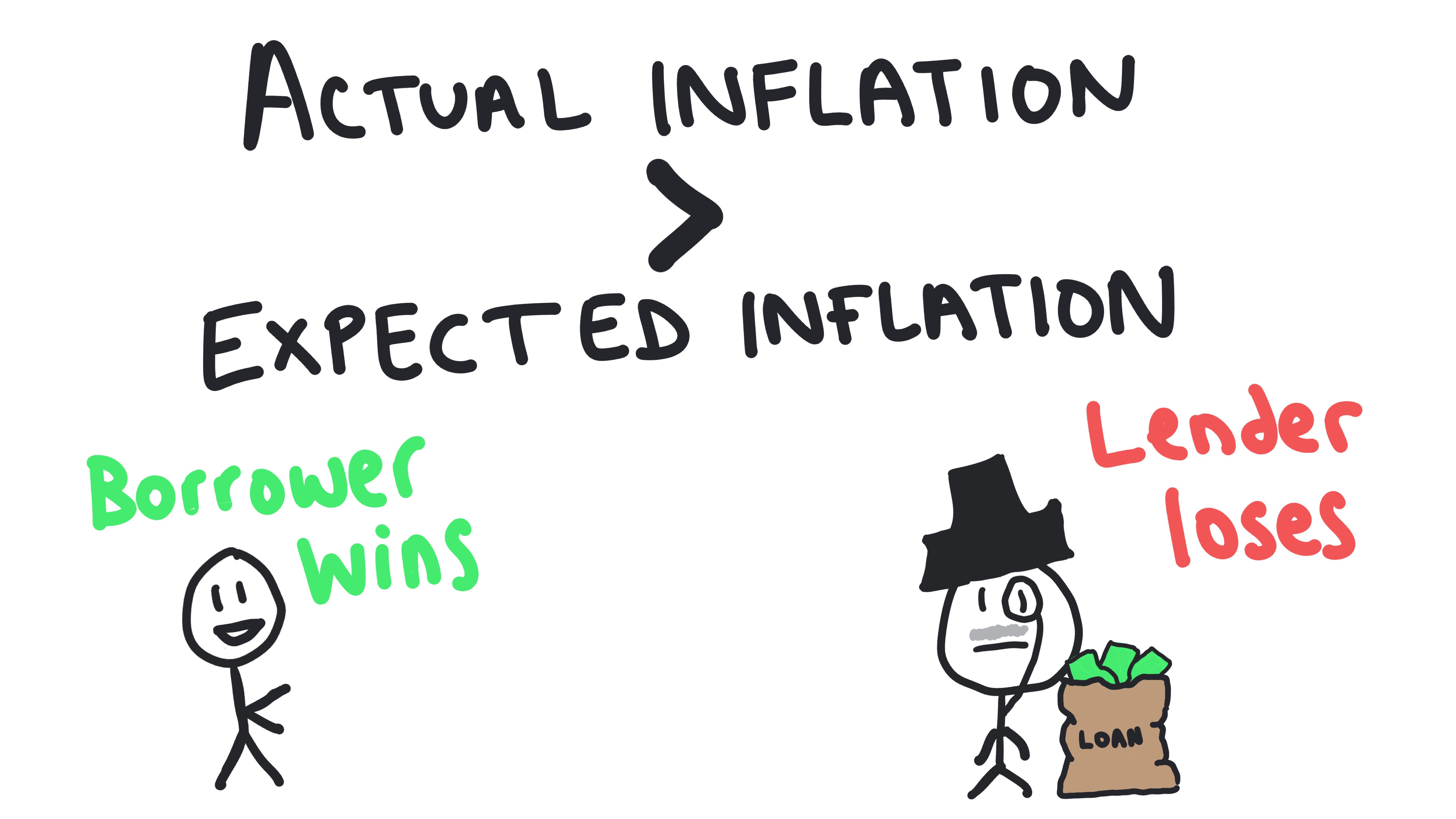
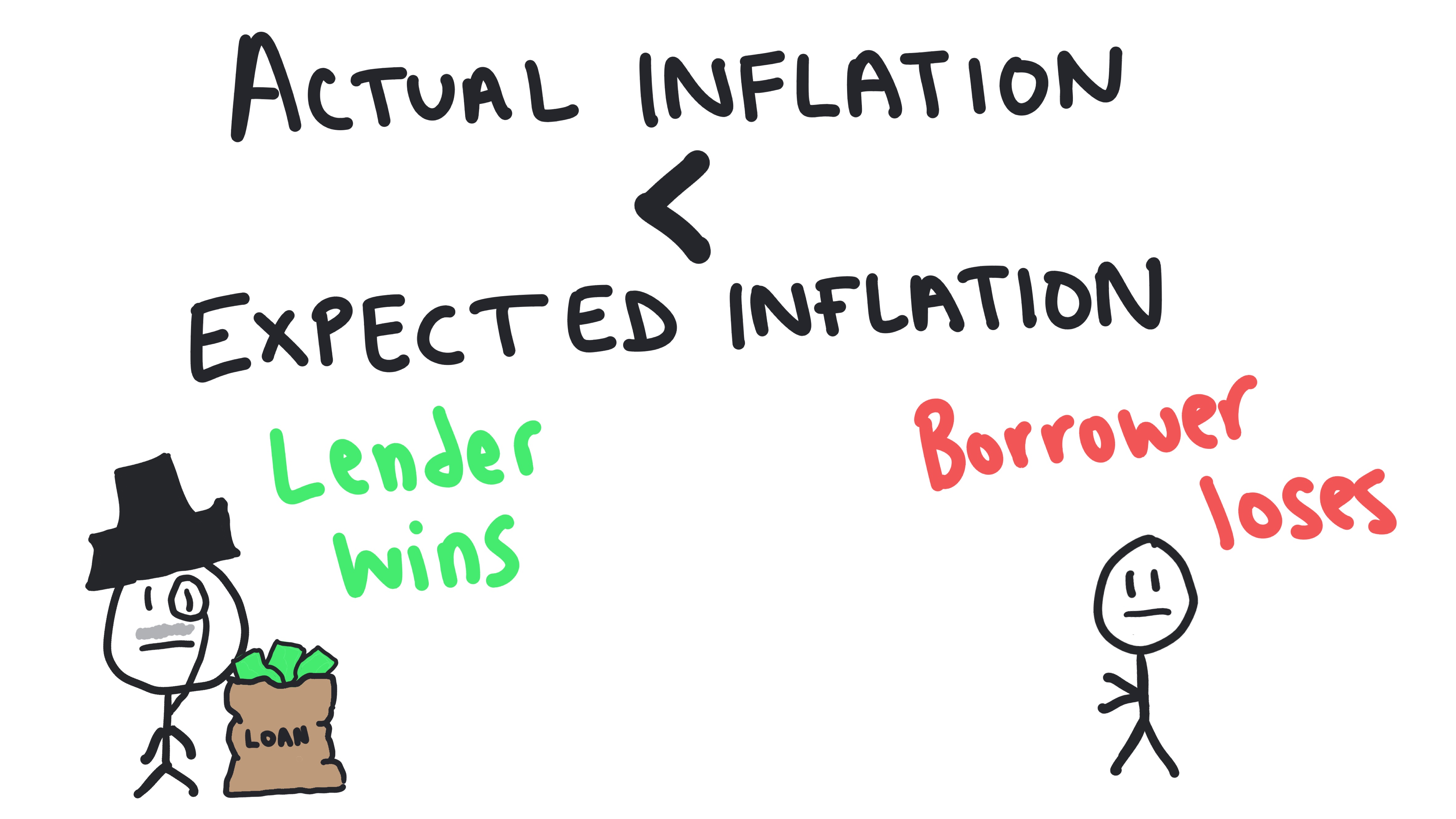
Differences between expected and actual inflation create winners and losers.
- •If actual inflation is lower than expected, lenders win and borrowers lose.
- •If actual inflation is higher than expected, borrowers win and lenders lose.
Whiteboards
Practice MCQs
Test your understanding of 4.2
If the nominal interest rate on a one-year loan is 5% and the expected inflation rate for that year is 3%, what is the expected real interest rate?
4.3 - Definition, Measurement, and Functions of Money
Definition, Measurement, and Functions of Money
Learn how money is defined, how it is measured, and the three key functions of money.
Key Terms & Definitions
The Three Functions of Money
To be considered money, something must serve as a medium of exchange, store of value, and unit of account.
- •Money must fulfill all three functions: Medium of Exchange, Store of Value, and Unit of Account
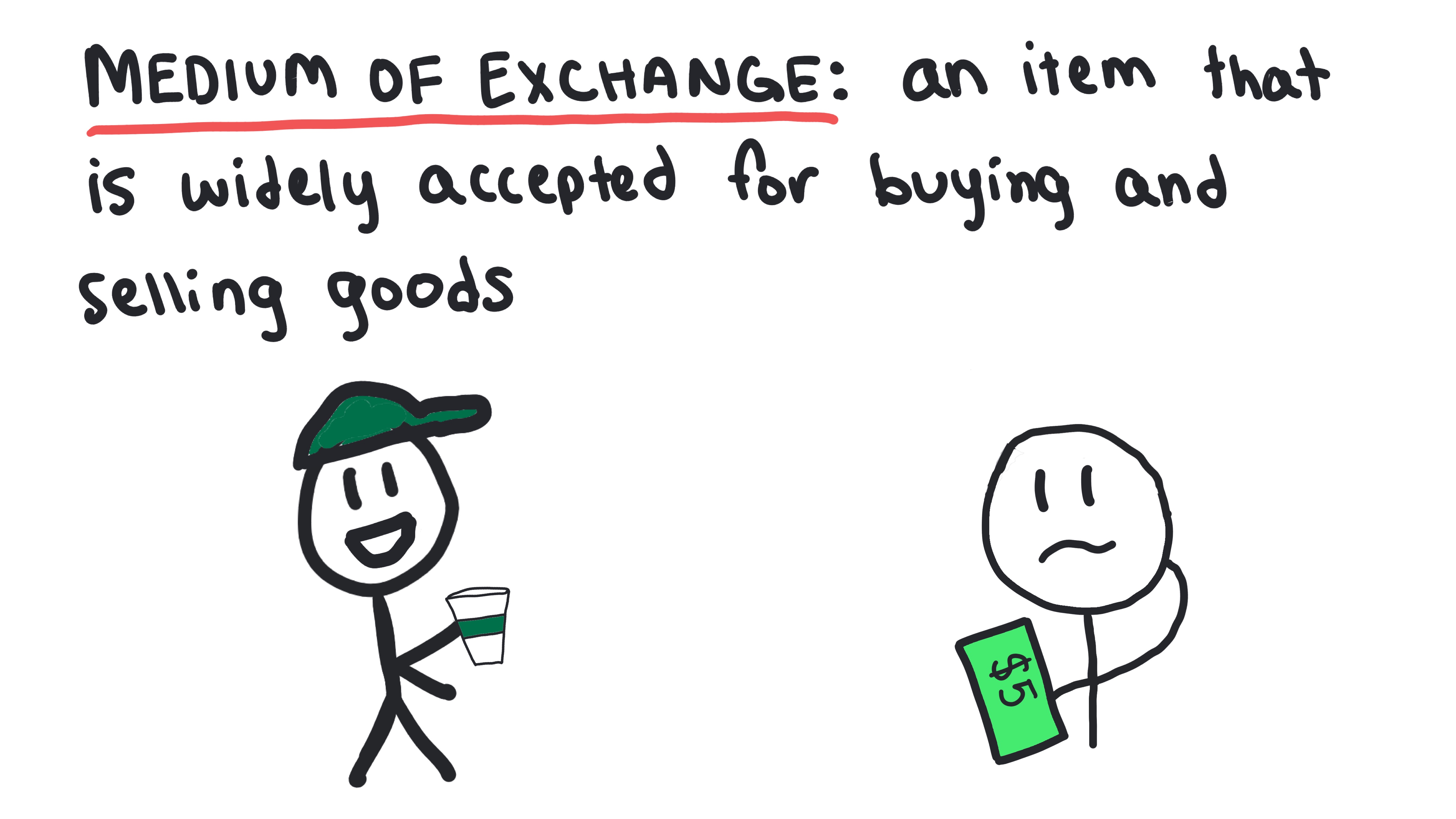
Medium of Exchange
A function of money where it is used to buy goods and services, avoiding the need for barter.
- •Example: Instead of trading 5 chickens for a pair of shoes (barter), you can use money (dollars) to buy the shoes directly. This makes transactions much easier and more efficient.
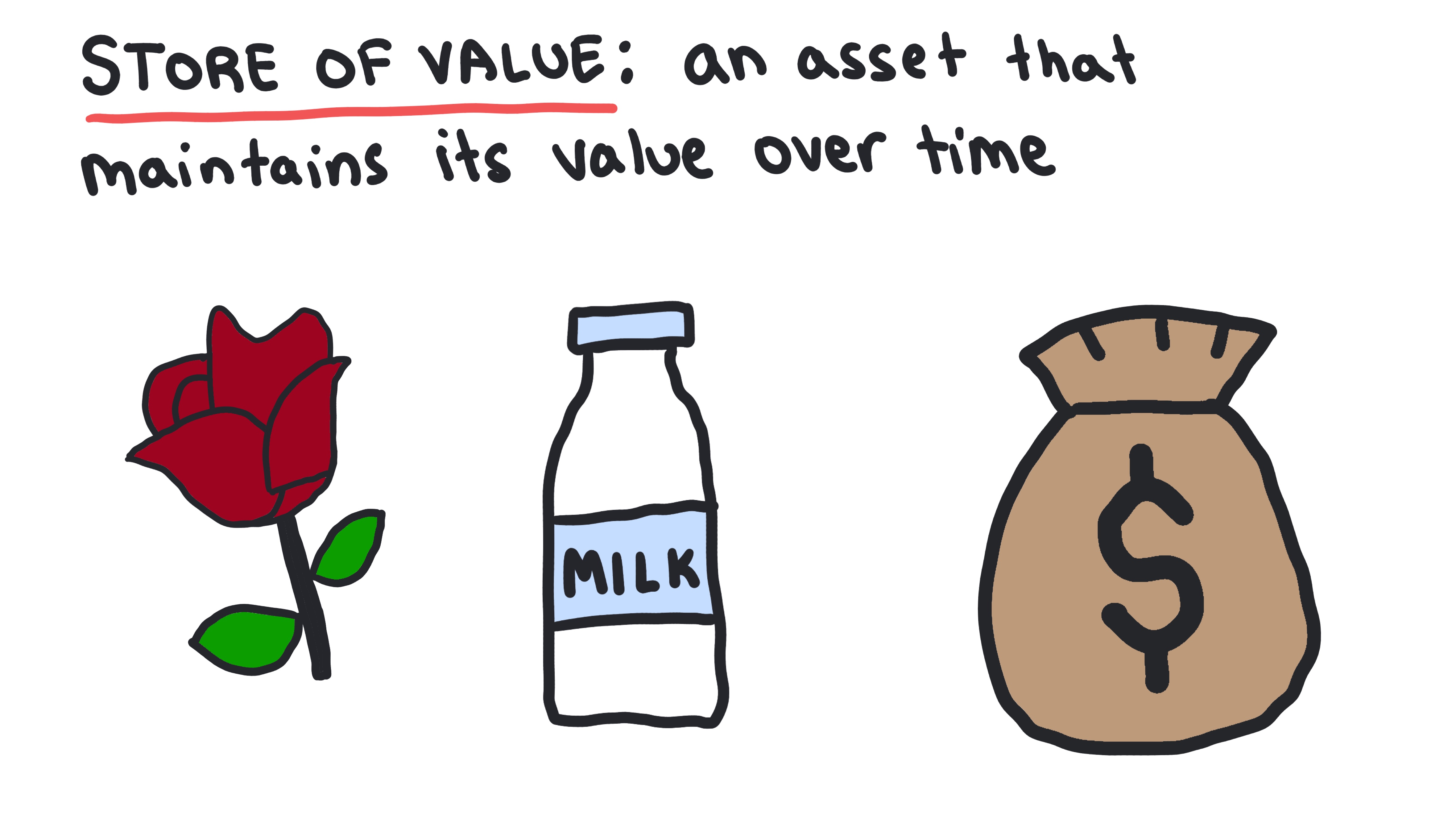
Store of Value
A function of money where it holds wealth over time without expiring or losing its value.
- •Example: You can save $100 today and use it to buy goods and services in the future. Unlike perishable goods like food, money doesn't spoil or expire, allowing you to preserve your purchasing power over time.
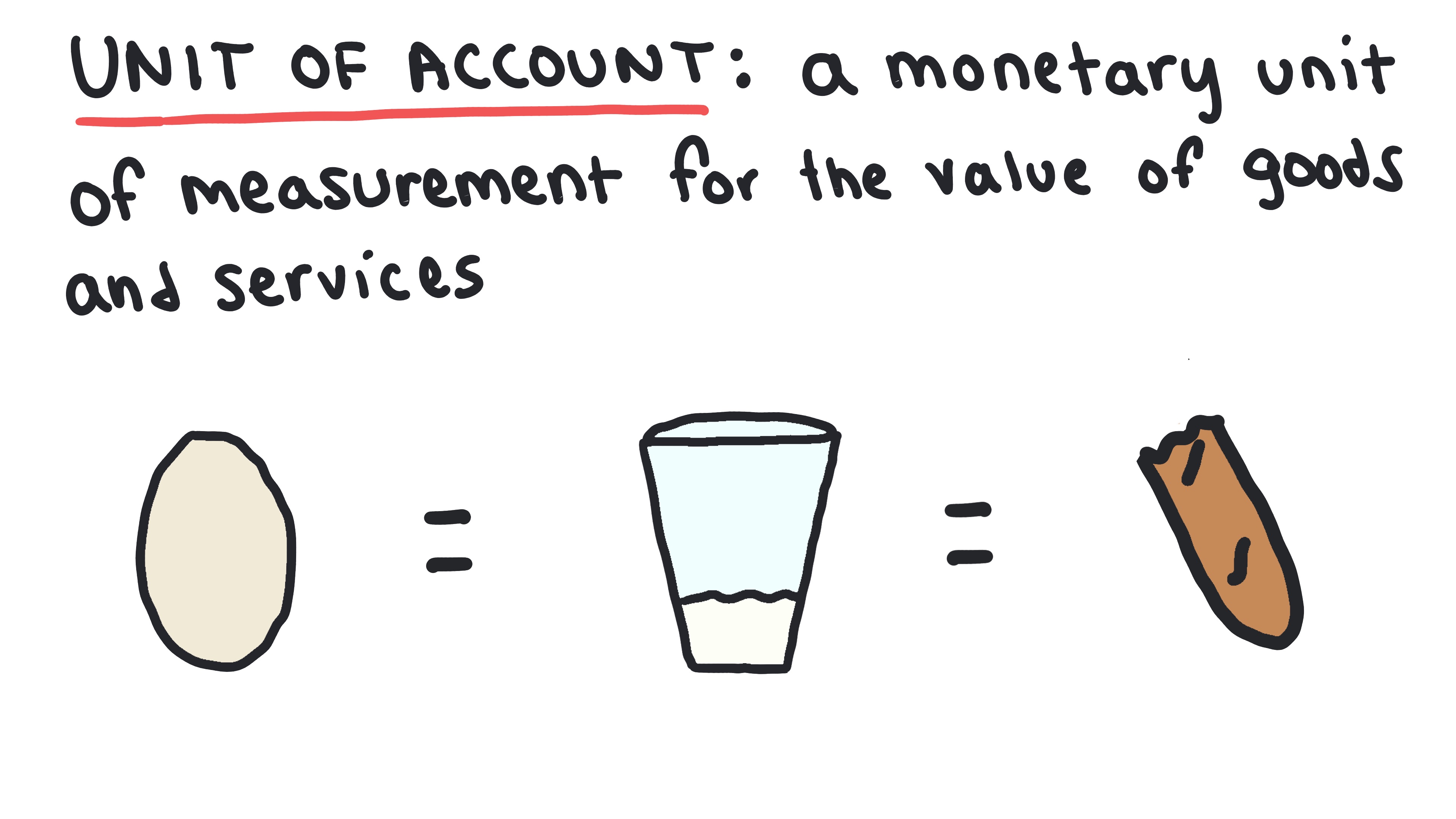
Unit of Account
A function of money where it serves as a standard measure for pricing goods and services.
- •Example: Prices are expressed in dollars (e.g., a pizza costs 15). This allows easy comparison of values - you can quickly see that the movie ticket is more expensive than the pizza, without needing to know how many pizzas equal one movie ticket.
Money Supply
The total amount of money circulating in an economy, measured in categories based on liquidity.
- •M1: Most liquid assets (cash and checking deposits).
- •M2: M1 plus savings accounts, money market accounts, and CDs.
- •Bonds are not part of the money supply.
Monetary Base
All physical currency in circulation plus the reserves banks hold.
Whiteboards
Practice MCQs
Test your understanding of 4.3
When you use cash to buy groceries, money is primarily functioning as a:
4.4 - Banking and the Expansion of the Money Supply
Banking and the Expansion of the Money Supply
Learn about the fractional reserve banking system and how lending leads to the expansion of the money supply.
Key Terms & Definitions
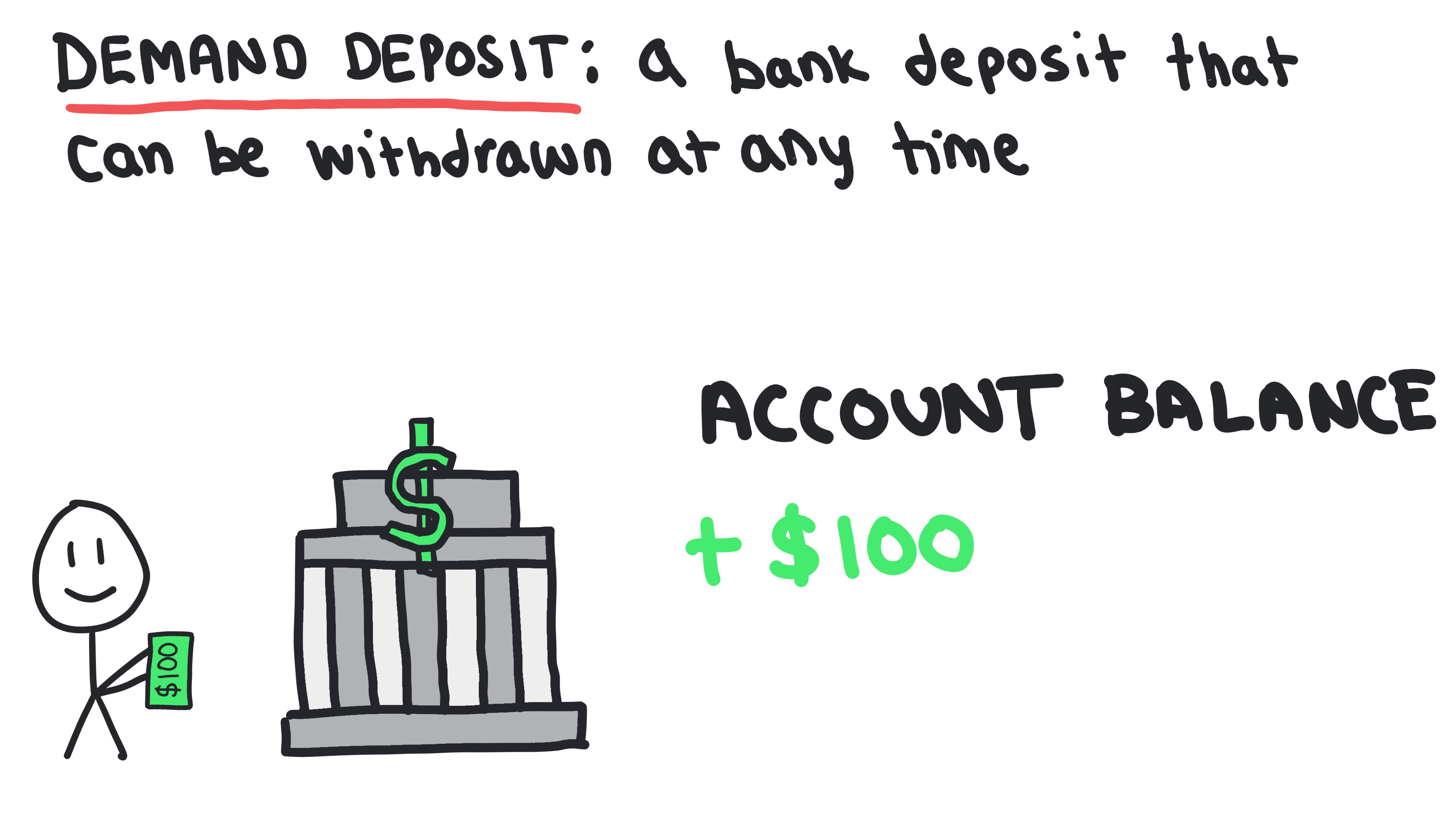
Demand Deposit
Money deposited in a bank account that can be withdrawn on demand.
Asset (Banking)
Something a bank is owed or owns; money that will come to the bank.
- •Examples: Loans made to customers (the bank is owed repayment), reserves held at the bank, securities owned by the bank
Liability (Banking)
Something a bank owes to others; money the bank must pay out.
- •Examples: Customer deposits (the bank owes customers their money back when they withdraw), money the bank has borrowed
Required Reserve Ratio (RRR)
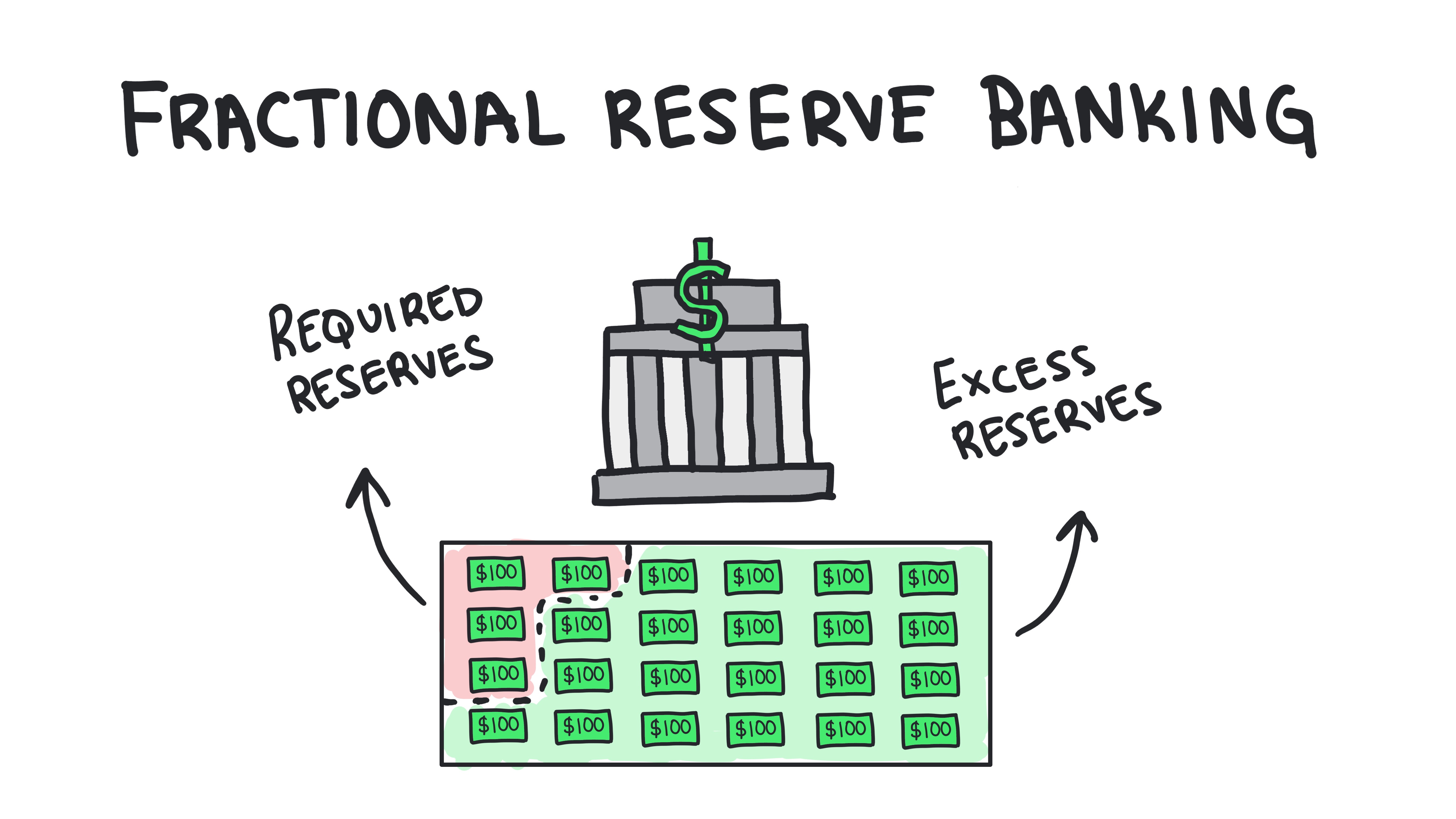
The fraction of deposits banks are required to keep in reserve.
Required Reserves
The dollar amount of deposits a bank must hold and cannot lend out.
Excess Reserves
Reserves held by a bank beyond the required amount; can be lent out.
Fractional Reserve Banking System
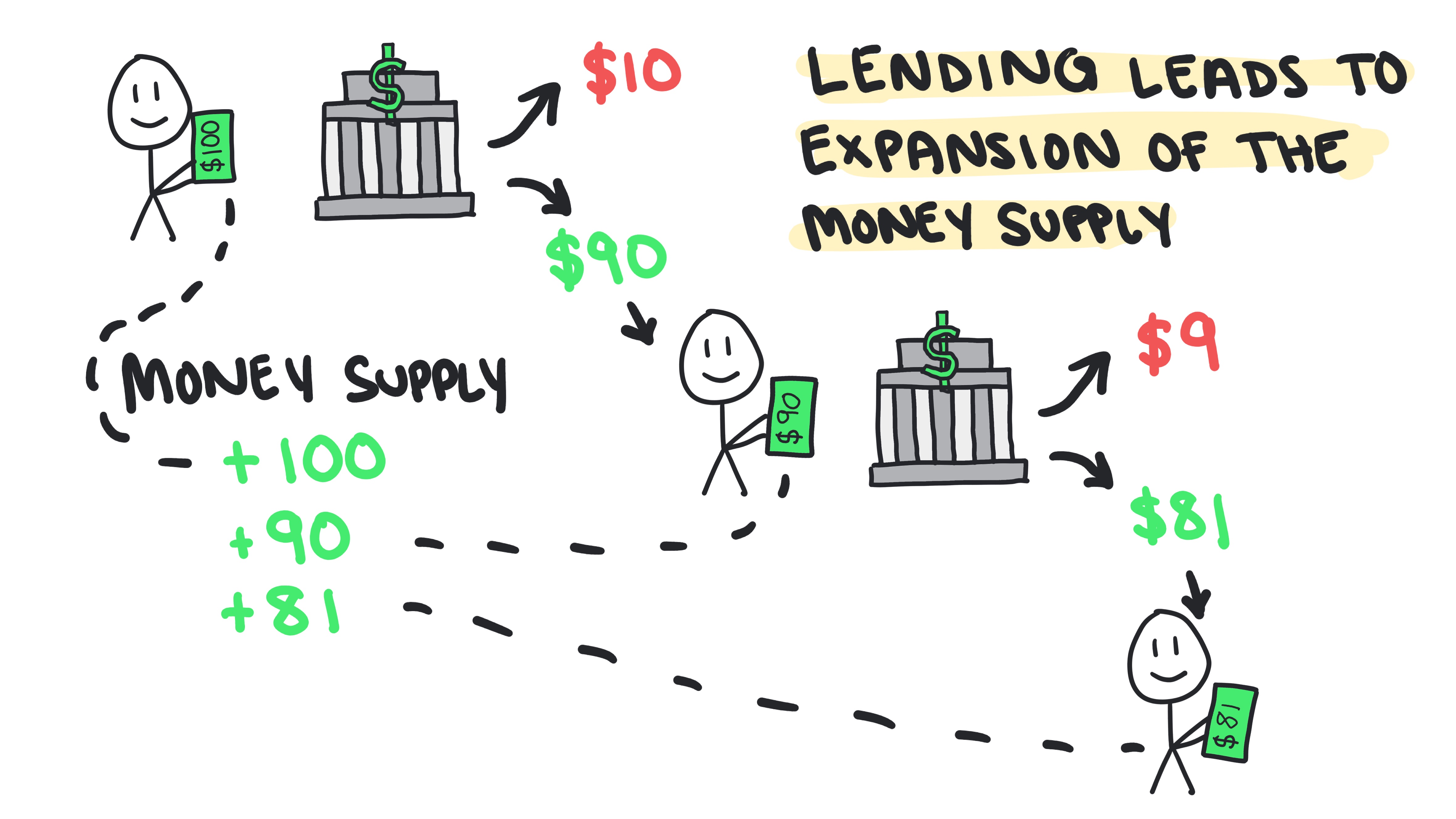
A banking system where banks keep only a fraction of deposits in reserve and lend out the rest.
Money Multiplier
Shows the maximum potential expansion of the money supply from an initial deposit.
- •Formula: Money Multiplier = 1 / Required Reserve Ratio
Maximum Potential Expansion of the Money Supply
The total possible increase in the money supply from an initial deposit.
- •Formula: Maximum Expansion = Initial Excess Reserves x Money Multiplier
Whiteboards
Practice MCQs
Test your understanding of 4.4
Suppose the required reserve ratio is 10%. If Sarah deposits $1,000 cash into her checking account at First Bank, what is the maximum possible increase in the total money supply from this single deposit?
4.5 - The Money Market
The Money Market
Learn about the money market graph, which depicts the relationship between nominal interest rates, the money supply, and the demand for money.
Key Terms & Definitions
Money Market
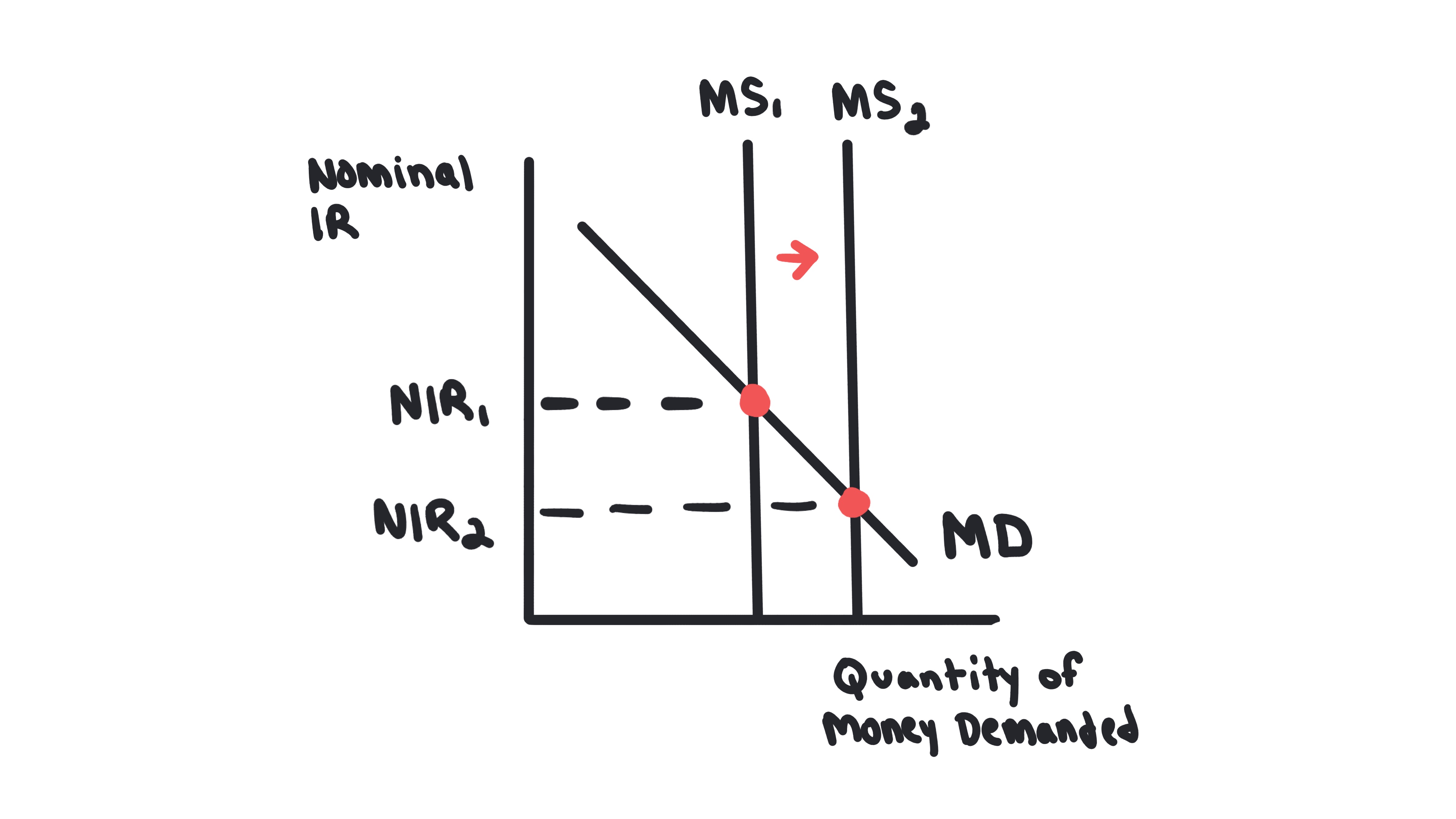
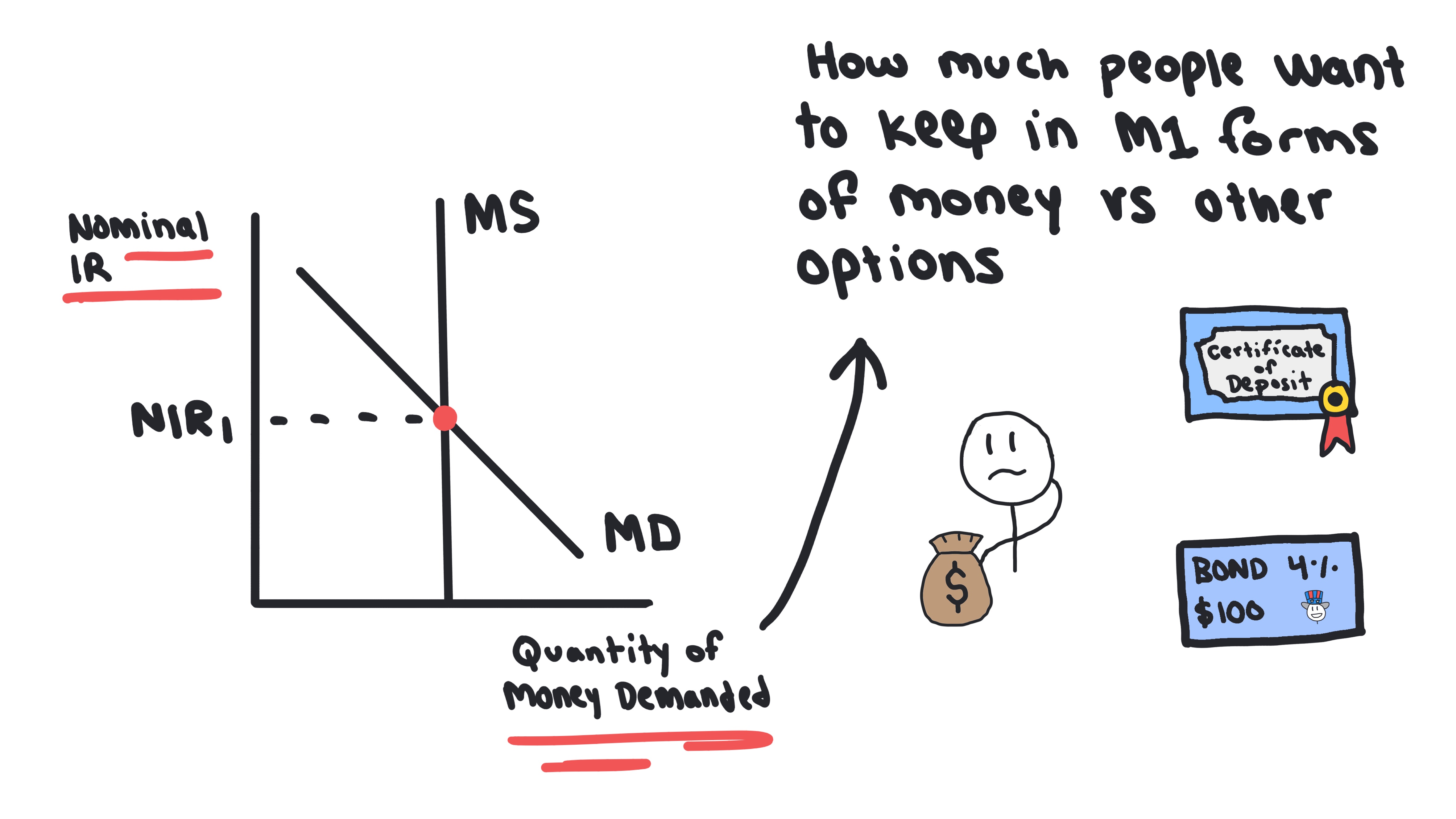
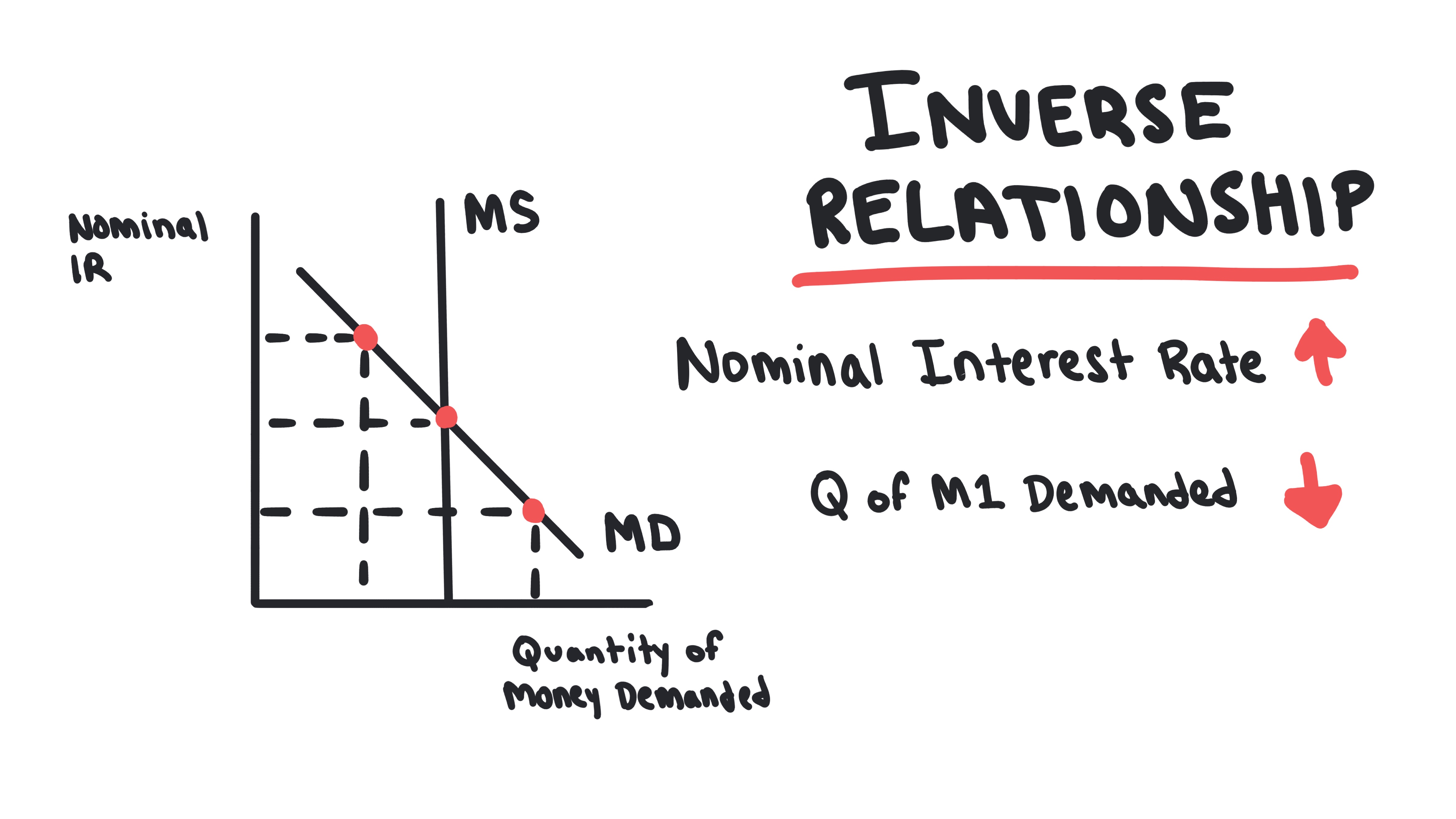
Graph showing the relationship between the supply of money and the demand for money, determining the equilibrium nominal interest rate.
Money Demand
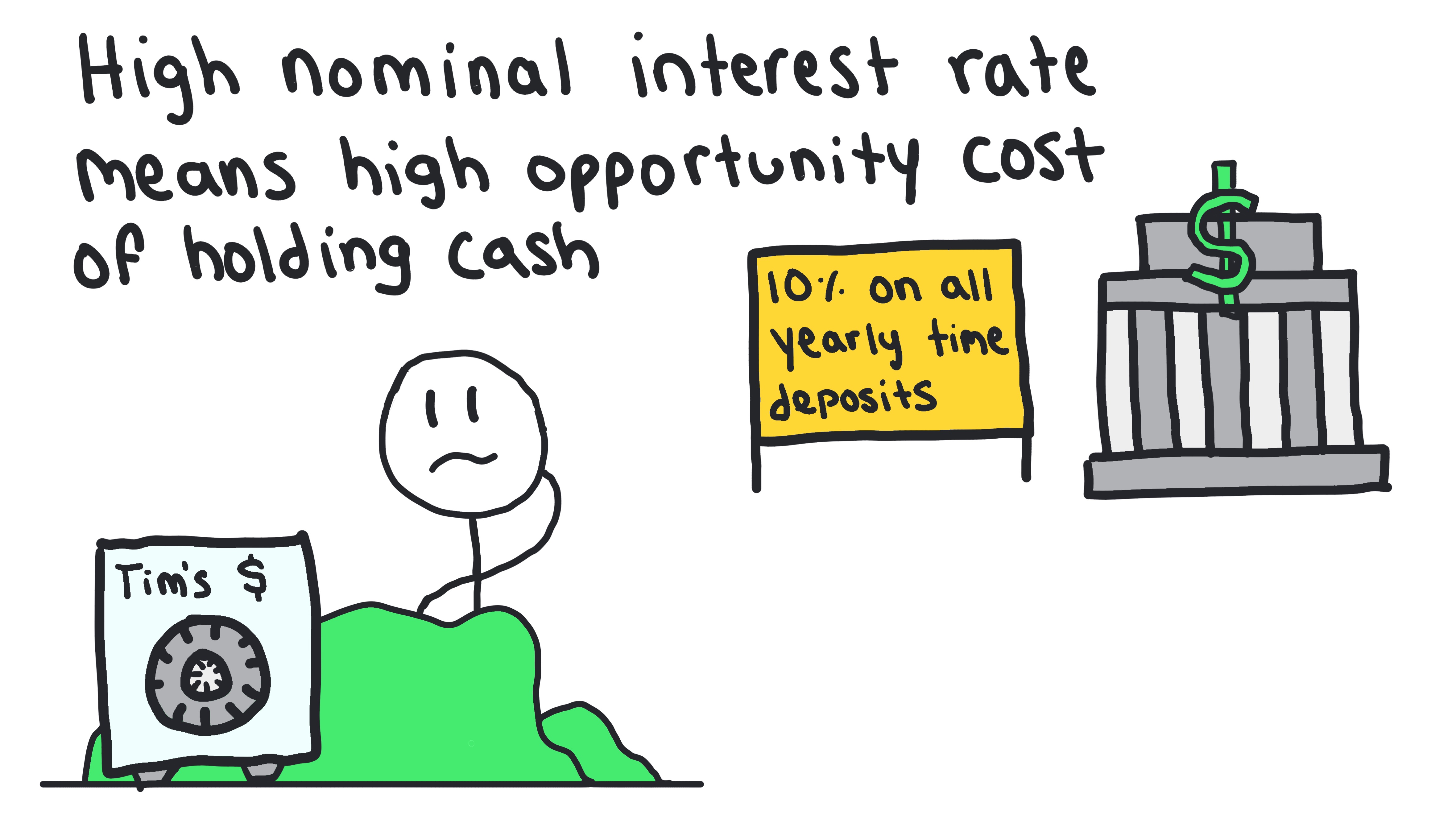
Shows the inverse relationship between the nominal interest rate and the quantity of money people want to hold in M1 forms.
- •Shifters: Changes in price level and changes in real GDP/income.
Money Supply (in the Money Market)
A fixed quantity of money at a given time; shown as a vertical line in the money market.
Equilibrium Nominal Interest Rate
The nominal interest rate where money supply and money demand intersect.
Whiteboards
Practice MCQs
Test your understanding of 4.5
If the overall price level in the economy increases, what is the likely short-run impact on the money demand curve and the nominal interest rate, ceteris paribus?
4.6 - Monetary Policy
Open Market Operations
Learn how buying and selling government bonds actually leads to changes in the money supply.
Key Terms & Definitions
Central Bank
A country’s “bank for banks.” In the U.S., this is the Federal Reserve, which conducts monetary policy.
Commercial Bank
A bank where individuals and businesses can deposit money, such as Citibank. Can borrow from the central bank.
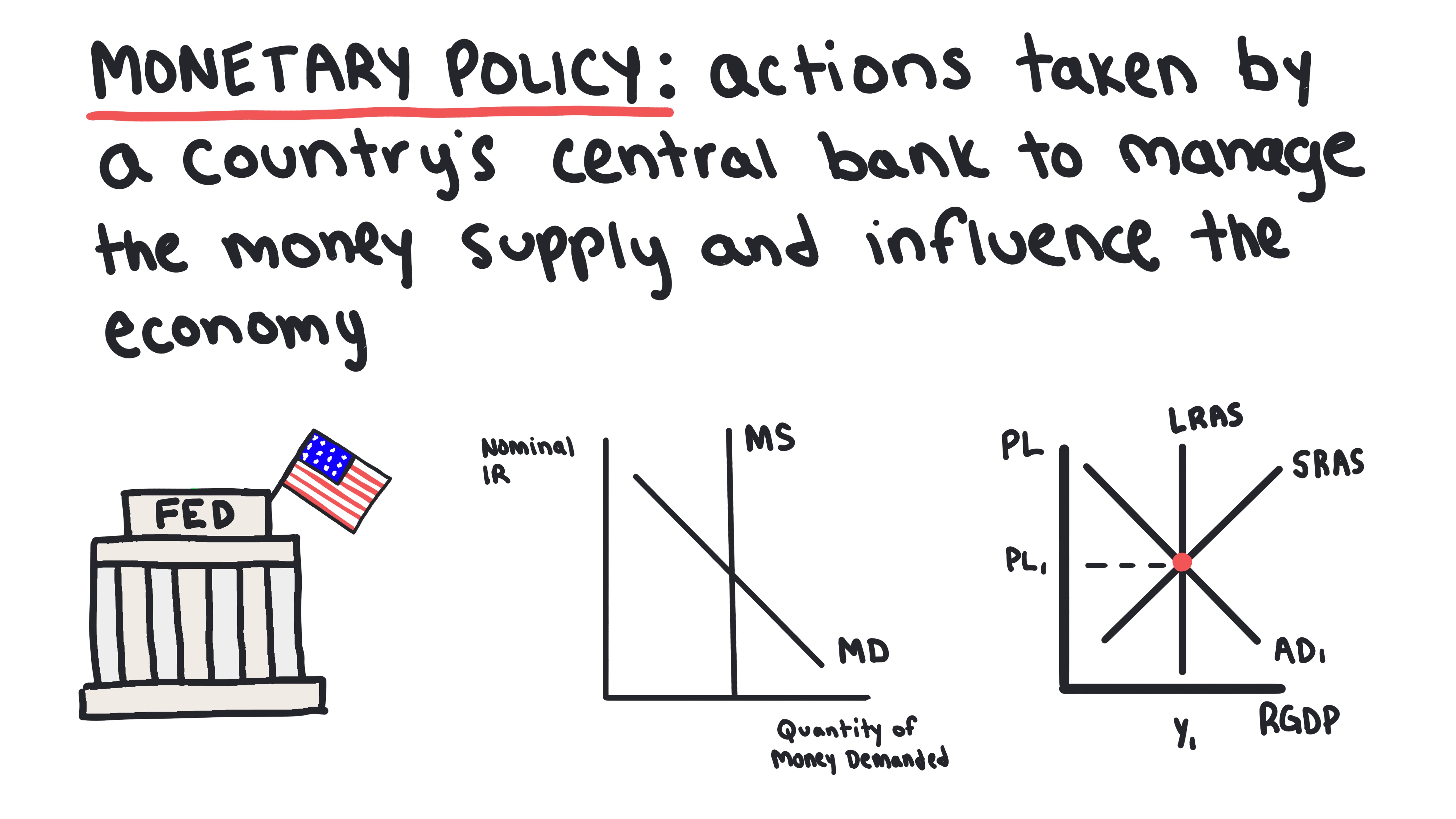
Monetary Policy
Actions taken by the central bank to manage the money supply and influence economic outcomes.
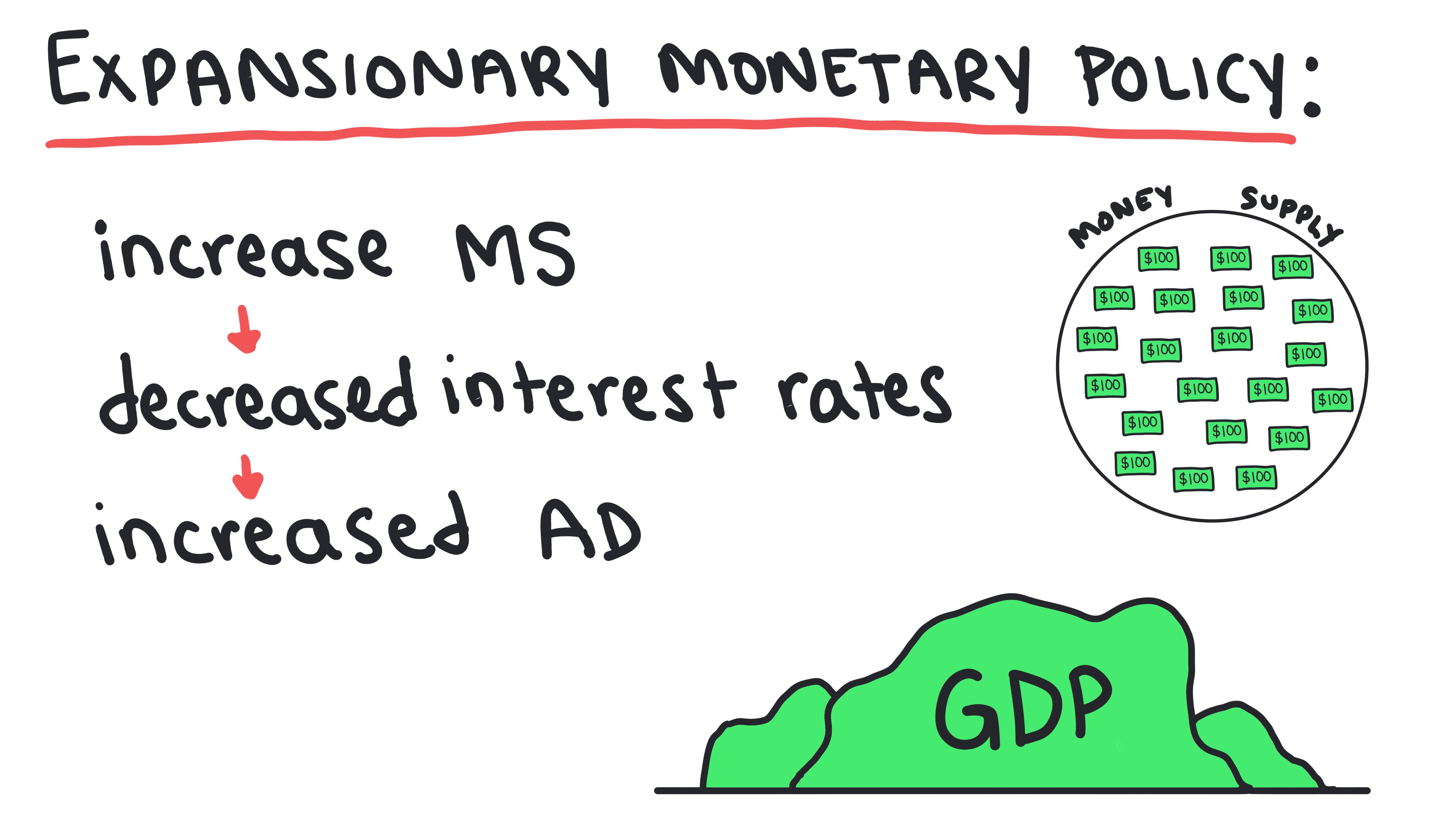
Expansionary Monetary Policy
Increases the money supply to lower interest rates, encouraging consumption and investment during a recessionary gap.
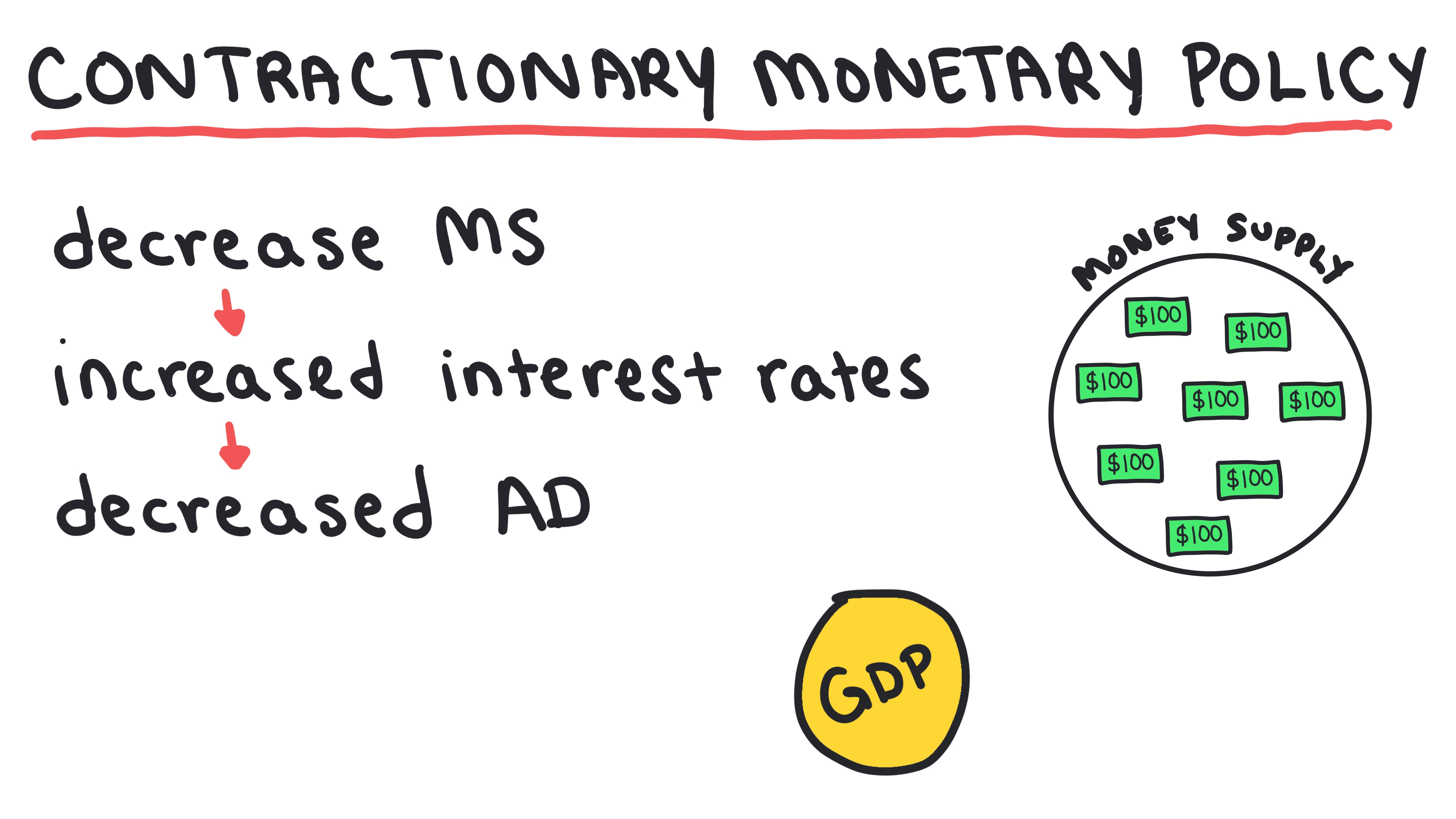
Contractionary Monetary Policy
Decreases the money supply to raise interest rates, reducing consumption and investment during an inflationary gap.
Tools of Monetary Policy
The main ways a central bank changes the money supply: Required Reserve Ratio, Discount Rate, and Open Market Operations.
- •Lower RRR → expands money supply; raise RRR → contracts it.
- •Lower discount rate → expands; raise discount rate → contracts.
- •OMO: Buy bonds → expands; Sell bonds → contracts.
Monetary Policy and the AD-AS Model
Monetary policy affects AD through changes in the money supply, interest rates, and investment/consumption.
- •Change in money supply → change in nominal interest rate → change in investment & consumption → shift in AD curve → change in Real GDP and Price Level.
Whiteboards
Practice MCQs
Test your understanding of 4.6
If the central bank conducts an open market sale of government bonds (in a traditional, limited reserves system), what is the expected impact on the money supply and the nominal interest rate?
4.7 - The Loanable Funds Market
Key Terms & Definitions
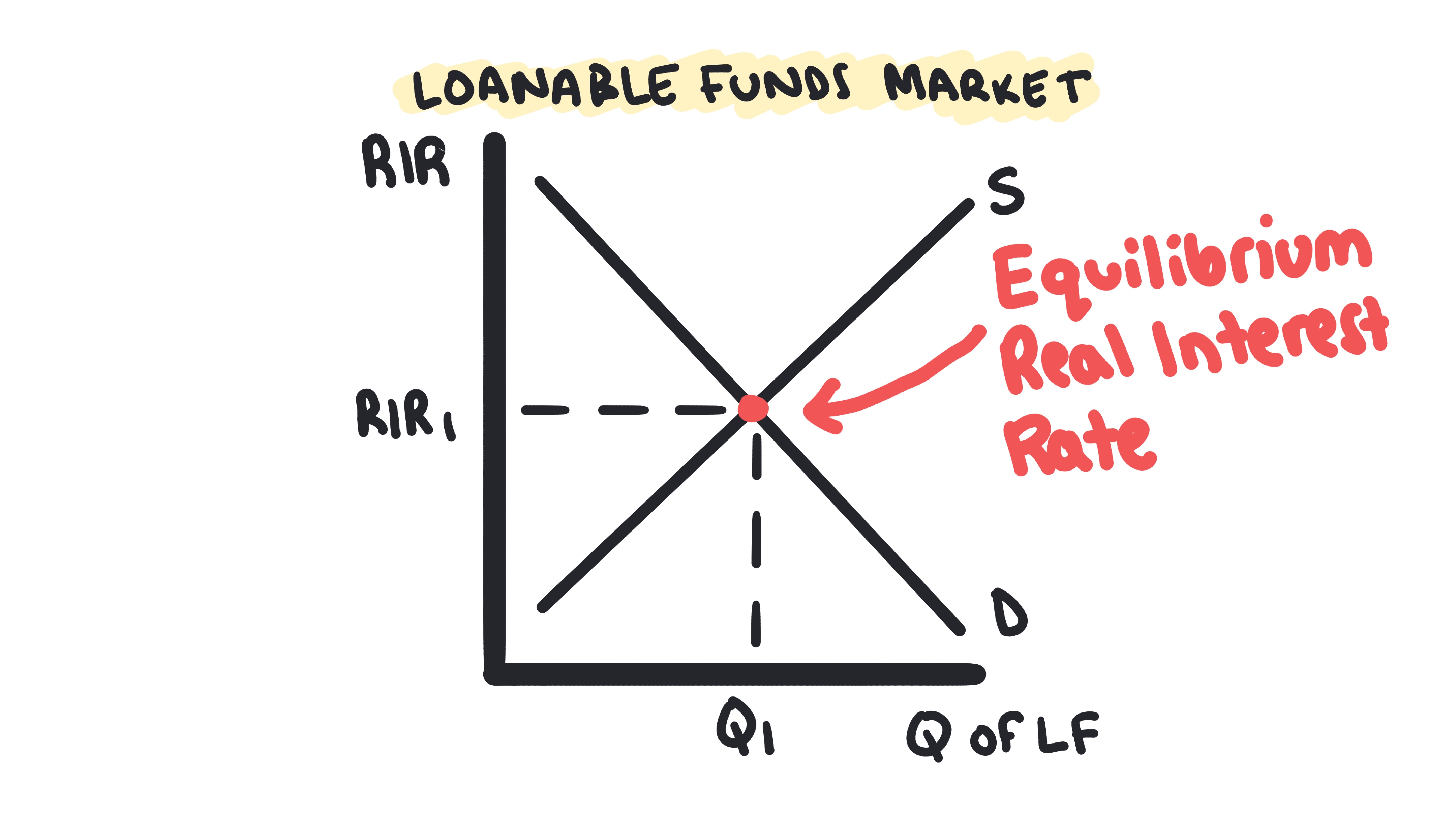
Loanable Funds Market
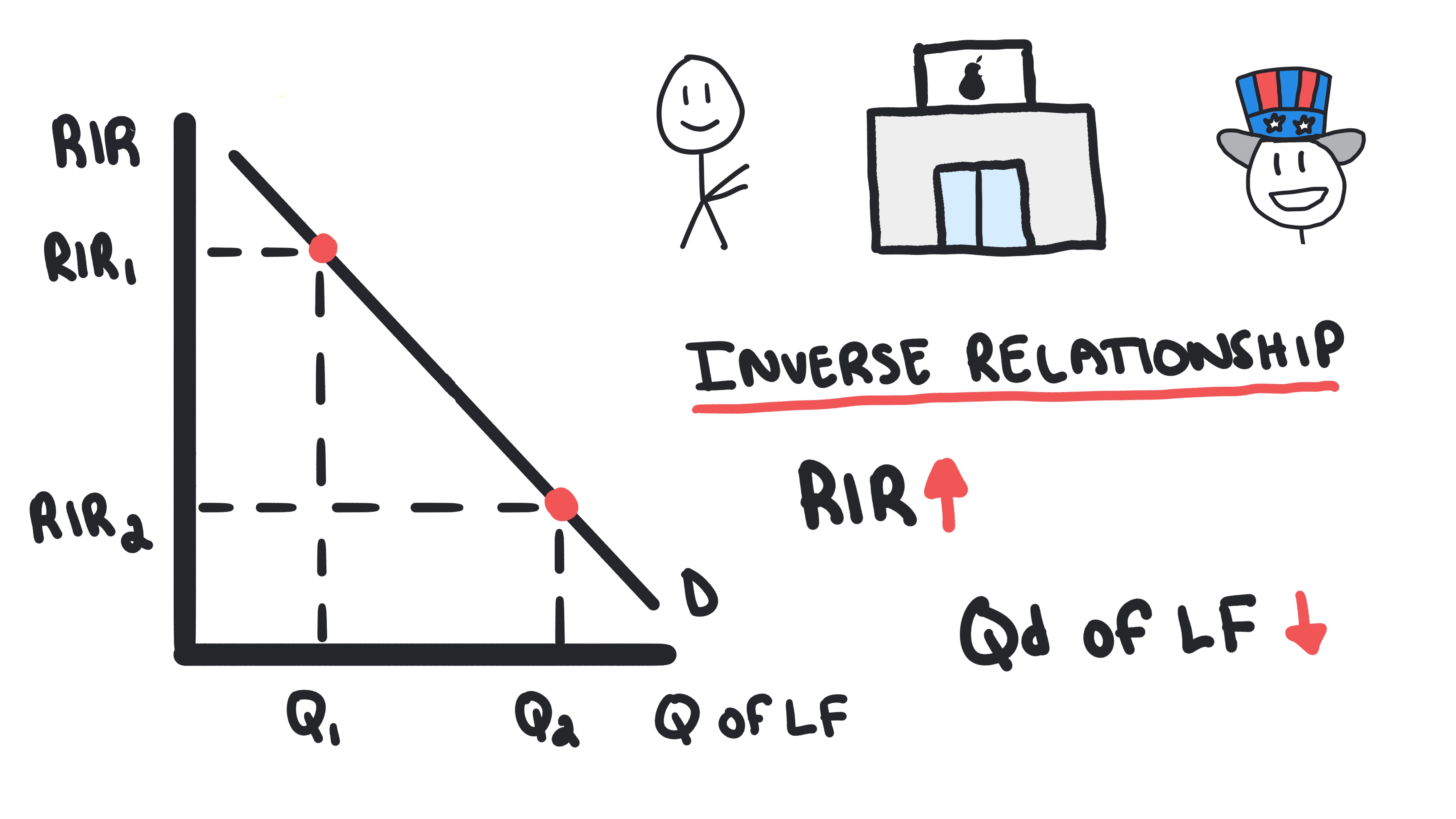
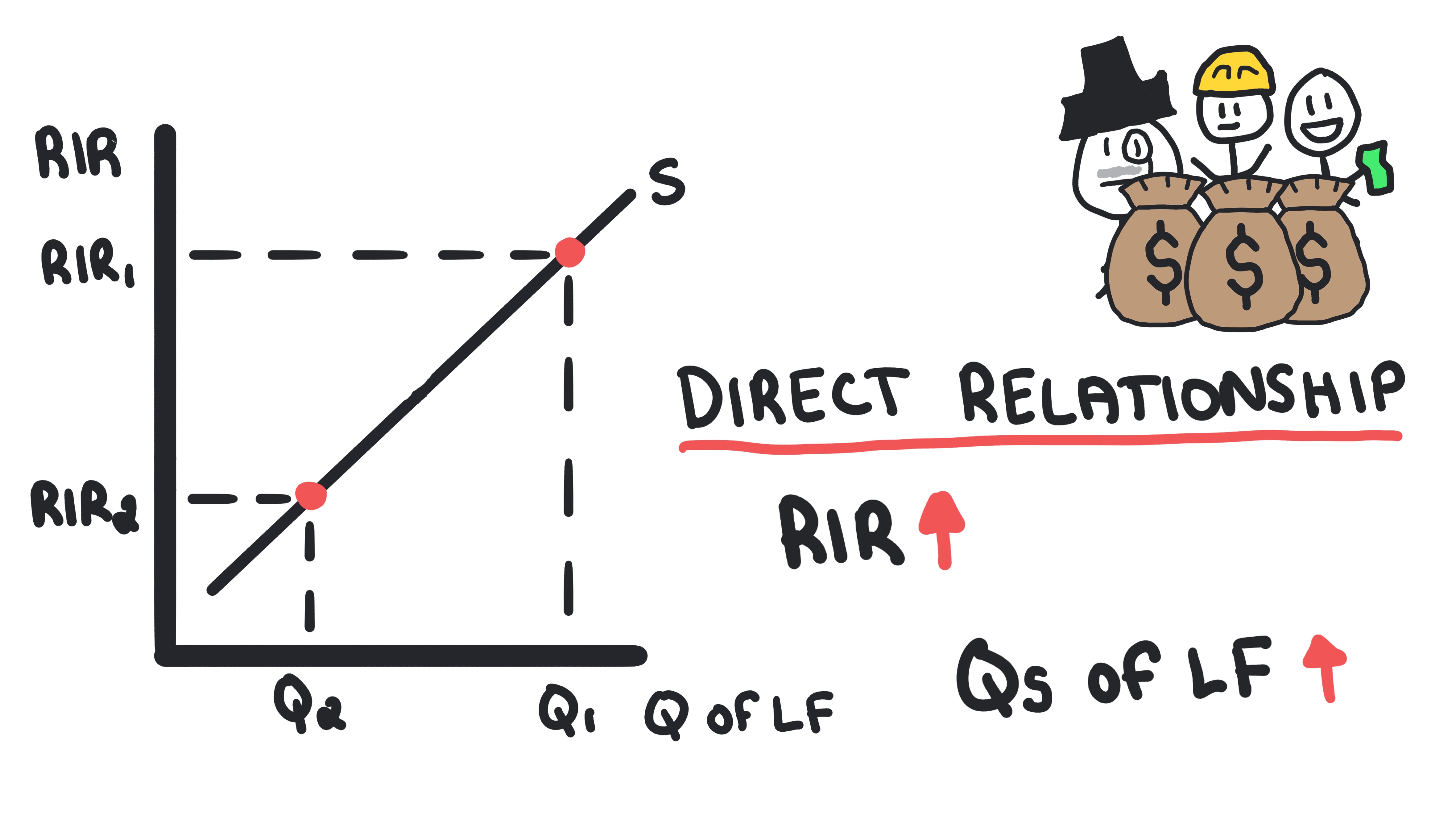
Market showing the interaction of borrowers (demand) and savers (supply), determining the equilibrium real interest rate.
Demand for Loanable Funds
Comes from borrowers; downward-sloping because lower real interest rates make borrowing cheaper.
- •Shifters: Government deficit spending, borrower expectations.
Supply of Loanable Funds
Comes from savers; upward-sloping because higher real interest rates make saving more rewarding.
- •Shifters: Savings rate, capital inflow.
Equilibrium Real Interest Rate
The real interest rate where the supply and demand for loanable funds are equal.
Whiteboards
Practice MCQs
Test your understanding of 4.7
If the government significantly increases its borrowing to finance large budget deficits, what is the likely impact in the loanable funds market?